Agile, Waterfall, or Hybrid: Start With the Risk Nobody Wants to Own

The best project methodology is the one that reduces the biggest delivery risk.
Yet methodology debates often start with preference. Product wants Agile. Finance wants fixed milestones. The PMO wants a standard framework. Three meetings later, everyone has defended a process and nobody has agreed which failure would do the most damage.
Agile, Waterfall, and Hybrid aren’t team identities. They’re different ways to manage uncertainty.
The practical question is simple: what would hurt most if you discovered it late? This article shows executives, PMOs, product leaders, and delivery teams how to answer that question and choose the methodology that exposes or controls the risk earlier.
What Agile, Waterfall, and Hybrid actually mean in a risk-based decision model
Agile is an adaptive delivery model optimized for changing requirements and iterative learning. It assumes that some important things will only become clear through short delivery cycles, feedback, and adjustment.
Waterfall is a sequential delivery model optimized for predictability and fixed scope. It works best when requirements can be defined with enough confidence up front and downstream execution depends on approved baselines.
Hybrid is a structured combination of the two, used to separate stable work from uncertain work. At its best, it applies different control models to different parts of the same initiative.
Methodology is a governance choice
Methodology shapes:
- Planning
- Approvals
- Funding
- Dependency management
- Tradeoffs
- Risk ownership
- Reporting
That makes methodology a governance model. It decides how the organization behaves when assumptions break.
Risk-based methodology selection means matching the delivery structure to the dominant uncertainty: scope, technology, regulation, stakeholder alignment, or the operating environment itself.
Whatever model the team chooses, those controls need to appear in the daily work.
Owners, deadlines, dependencies, approvals, and decisions can’t exist only in a methodology document that nobody opens after kickoff.

Why risk-first methodology selection matters to business outcomes
The wrong delivery model increases rework, delays decisions, and hides emerging issues until they become expensive.
The problem with false confidence
A plan can look precise while being structurally unable to absorb uncertainty.
Fixed milestones, locked budgets, and polished dashboards may create the impression of control even when core assumptions remain untested. A team can be “on track” in the report while still carrying unresolved product, technical, or compliance risk.
A delivery lead we spoke to described a transformation program where every steering report remained green. The integration team was meeting its milestones. So were the data team and the external vendor. The problem was that nobody had tested whether their outputs worked together. When the first end-to-end test finally happened a few weeks before launch, a data-mapping failure sent several weeks of supposedly finished work back into development. An expensive lesson…
Executives usually tolerate risk better than surprise. If methodology choice makes uncertainty visible early, leadership can decide what to fund, defer, or redesign. If it hides uncertainty behind process language, trust erodes once delivery starts to wobble.
Where the damage shows up
The effects usually appear in predictable places:
- Forecast accuracy drops because estimates depend on information the team doesn’t yet have.
- Learning slows because feedback arrives too late.
- Budget control worsens because late changes cost more.
- Quality risk rises when defects or design flaws surface after major commitments.
- Compliance exposure increases when evidence gaps are discovered after delivery work is already complete.
The damage often appears as rework rather than one dramatic failure. A team completes development against an approved requirement, only for users to reject the workflow during late-stage testing. The work was delivered as planned, but the plan protected the baseline rather than testing whether the baseline was right. The project then absorbs another round of design, development, approval, and training work.
A risk-first approach also improves alignment by forcing tradeoffs into the open. Are you optimizing for learning, variance reduction, auditability, or dependency control?
Pro Tip: Before approving a methodology, ask each workstream lead to name the one risk they most want to discover in the first 30 days. If the chosen model doesn’t help expose that risk early, the model is probably serving preference rather than delivery control.
Project Risk Ownership Matrix Template With Escalation Triggers
Enter your email address to get a comprehensive, step-by-step guide

How a risk-first methodology choice works: matching uncertainty to delivery structure
When requirements are stable and approval gates matter most, Waterfall often reduces coordination risk.
When requirements are uncertain and discovery is essential, Agile often reduces learning risk.
When both conditions coexist, Hybrid can reduce transition risk between what is known and what is still emerging.
The useful question is: “What uncertainty hurts us most if we discover it late?”
Some risks are easy to reverse. Others become expensive once locked into architecture, contracts, training, regulatory submissions, or public commitments.
|
Risk type |
Agile |
Waterfall |
Hybrid |
|---|---|---|---|
|
Requirement volatility |
Strong fit; supports reprioritization |
Weak fit if scope changes often |
Useful when fixed and fluid requirements coexist |
|
Technical uncertainty |
Strong fit; enables validation |
Risky if assumptions are unproven |
Useful when stable platforms include experimental components |
|
Regulatory exposure |
Needs strong control overlays |
Strong fit for evidence and approvals |
Useful when regulated work coexists with experimentation |
|
Dependency complexity |
Can struggle with tight alignment |
Strong for coordinated sequencing |
Useful when dependencies are stable but features iterate |
|
Stakeholder alignment risk |
Strong when feedback reduces ambiguity |
Works if stakeholders commit early |
Useful when governance is fixed but needs evolve |
Three questions to ask first
A simple framework helps:
- Which risks are easiest to surface early?
- Which risks are hardest to reverse later?
- Which risks do the most damage to cost, timeline, or credibility if handled in the wrong sequence?
A sales team replacing its CRM, for example, may think the biggest risk is data migration. That may be true. But if sales managers disagree on pipeline stages, handoff rules, or reporting definitions, stakeholder alignment may be the real delivery risk.
In that case, a purely sequential rollout can lock in the wrong operating model before users have tested it.
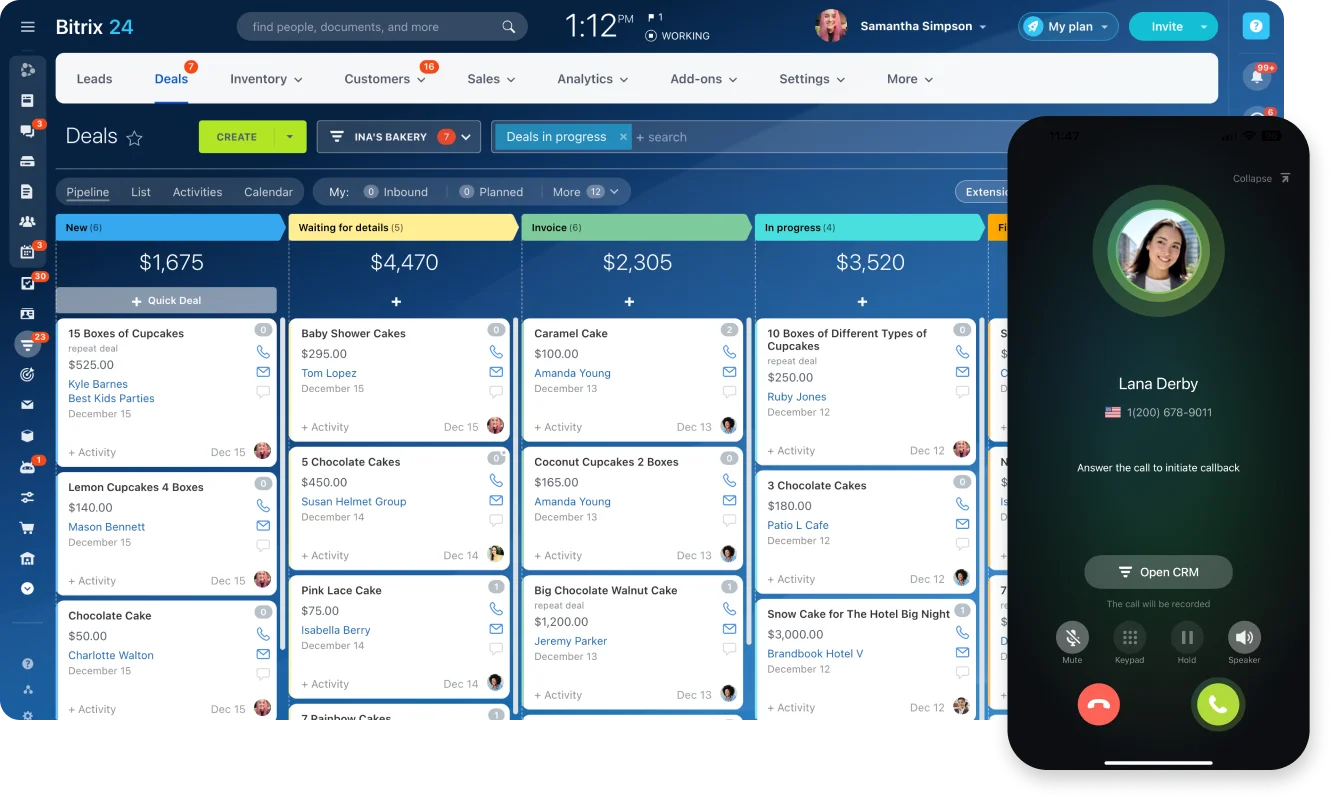
Bitrix24 can support this kind of risk split by keeping CRM records, task ownership, sales pipeline work, and collaboration in one place. That doesn’t decide the methodology, but it does help teams connect delivery work to the business process being changed.
The core risk dimensions that determine whether Agile, Waterfall, or Hybrid fits
Several risk dimensions usually drive the choice. The right answer depends less on methodology labels and more on what type of uncertainty the project carries.
Risks inside the work
Scope certainty
Can the team define what needs to be delivered with enough confidence to plan it in detail?
If yes, Waterfall becomes more viable. If not, Agile gains an advantage because the team needs room to learn, adjust, and reprioritize.
Change frequency
Some environments generate constant new information from customers, operations, compliance teams, or market shifts.
A model that absorbs change is better only when change is likely enough to matter. If change is rare or tightly controlled, constant reprioritization can create more noise than value.
Integration complexity
Projects with many downstream systems, fixed interfaces, or tightly coupled infrastructure raise the cost of loosely managed iteration.
For example, a customer platform rollout may include a stable back-end integration layer and a changing front-end experience. Treating both the same way can either slow learning or weaken control.
Risks around the work
Compliance burden
Compliance burden requires traceability, approvals, validation evidence, or formal sign-offs to be built into normal delivery rather than added later.
This is where many Agile adoptions struggle. The team may run sprints, but if evidence, approvals, and audit trails are handled manually after the fact, governance becomes a separate cleanup exercise.
External dependencies
Vendors, regulators, architecture boards, procurement cycles, and business calendars can constrain even teams that want to move iteratively.
A team can be Agile internally while still waiting weeks for a vendor environment, legal review, or architecture sign-off. That reality should shape the method.
Decision latency
Decision latency is often underestimated. Fast iteration requires fast decisions.
If key decisions take weeks, Agile loses much of its advantage. In that environment, the problem may not be the methodology. It may be the decision system around it.
|
Risk dimension |
Stronger fit for Agile |
Stronger fit for Waterfall |
Stronger fit for Hybrid |
|---|---|---|---|
|
Scope certainty |
Low |
High |
Mixed |
|
Change frequency |
High |
Low |
Uneven across workstreams |
|
Integration complexity |
Moderate |
High with fixed sequencing |
High but separable |
|
Compliance burden |
Manageable with mature controls |
High |
High in some areas, low in others |
|
Decision latency |
Low latency required |
Can tolerate slower approvals |
Mixed governance speeds |
Waterfall contains variance when the path is mostly known. Agile contains ambiguity when learning is the main challenge. Hybrid contains mixed conditions where forcing one model across all work creates avoidable friction.
Pro Tip: Map each major workstream against these risk dimensions before deciding. A single project may need different delivery controls for data migration, user experience, training, reporting, and compliance evidence.

Common mistakes and misconceptions in Agile, Waterfall, and Hybrid selection
Methodology debates often go wrong because teams treat the labels as values. The labels are operating choices with tradeoffs.
“Agile is always faster”
Agile is fast when teams can learn quickly, decide quickly, and release in small increments.
In constrained environments, iteration can create churn rather than speed. If every change needs a steering committee, architecture review, or procurement update, the team may be running Agile rituals without Agile decision speed.
“Waterfall is outdated”
Waterfall still has a place when requirements are stable, controls are mandatory, and interdependencies are tight.
A regulated infrastructure upgrade, for example, may benefit from defined phases, evidence checkpoints, and sequenced approvals. In that setting, looser iteration can increase coordination risk.
“Hybrid means doing everything at once”
Real Hybrid is a conscious split between stable and uncertain work, with defined interfaces between them.
Without that design, Hybrid becomes ambiguity with extra meetings. Teams get the ceremonies of Agile, the reporting burden of Waterfall, and none of the clarity from either.
Governance problems get misread as methodology problems
A project manager we interviewed had watched leadership blame Agile after two missed releases. The post-mortem showed that sprint delivery wasn’t the constraint. Product decisions sat in a director’s inbox for days, a security review remained in a shared inbox because Legal thought IT owned it, and the vendor wasn’t invited into planning until development had already started.
The methodology took the blame because it was easier to replace than the decision-making structure around it. Moving the team to Waterfall would have produced the same delays.
Changing methodology won’t fix missing ownership, slow decisions, or dependencies that appear halfway through delivery. A practical fix is to define ownership and handoffs directly in the team’s operating system.
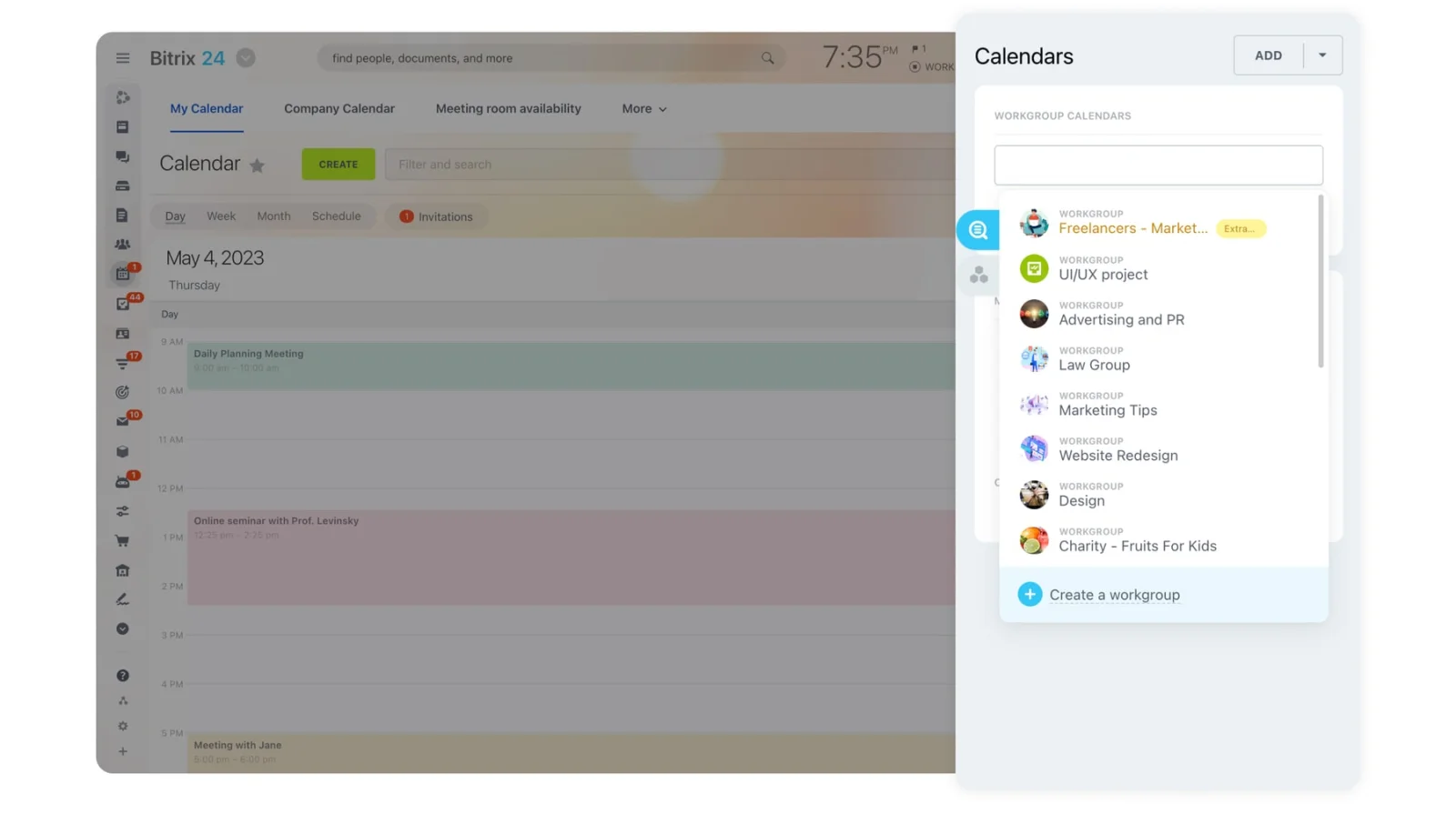
Bitrix24 project management tools can help teams connect tasks, deadlines, workgroups, calendars, and approval flows so methodology decisions become visible in daily work rather than trapped in slide decks.
Mistake 5: Fake Hybrid creates extra meetings, not better control
The fake Hybrid pattern is common:
- Funding stays annual.
- Scope stays fixed.
- Approval gates stay heavy.
- Reporting stays milestone-based.
- Delivery teams are told to “be Agile.”
The result is tension between iterative work and rigid control mechanisms that never changed to support it.
Pro Tip: If you choose Hybrid, write down what is fixed, what can change, who approves changes, and how iterative findings feed formal governance. If those rules are vague, the model will create confusion.
Real-world business use cases: when each methodology reduces the most risk
Two projects in the same company can need different methodologies. Standardization helps only when risk conditions are similar enough that one governance model improves delivery rather than distorts it.
Regulated infrastructure upgrade
For a regulated infrastructure upgrade in a bank, healthcare organization, utility, or public-sector environment, the dominant risks are often compliance failure, outage exposure, dependency sequencing, and formal change approval.
Waterfall frequently reduces more risk because predictability and control points matter more than discovery speed.
New digital product discovery
For a new digital product where customer needs are still being tested, the main risks are building the wrong thing, overcommitting to unvalidated features, and making technical choices before usage patterns are known.
Agile reduces learning risk early because teams can test assumptions in smaller increments.
ERP modernization
ERP modernization is a mixed case.
Core finance or supply-chain processes may be tightly governed, while reporting layers, workflows, and user experience elements still need iteration. Hybrid often works better because some work demands sequencing and traceability, while other work benefits from rapid feedback.
Customer platform rollout
A customer platform rollout often combines data constraints with changing experience needs.
Back-end data structure, migration rules, and integrations may need tight control. Front-end workflows, notifications, and service processes may need user feedback. Hybrid helps when those areas can be separated cleanly.
|
Project scenario |
Dominant risk |
Best-fit methodology |
Why |
|---|---|---|---|
|
Regulated infrastructure upgrade |
Compliance and sequencing failure |
Waterfall |
Controls, sign-offs, and dependency planning outweigh discovery needs |
|
New digital product discovery |
Unproven user needs |
Agile |
Frequent feedback reduces product and design uncertainty |
|
ERP modernization |
Mixed governance and evolving process design |
Hybrid |
Stable core work can be sequenced while uncertain areas iterate |
|
Customer platform rollout |
Data constraints plus changing experience needs |
Hybrid |
Back-end controls coexist with front-end learning loops |
For teams that need structured collaboration around these mixed workstreams, Bitrix24 workgroups and collaboration tools can help separate workstreams without scattering decisions across disconnected tools.
Operational impact, scaling limits, and what changes when portfolios get larger
Methodology choice affects funding cadence, reporting, vendor management, release governance, resource planning, and executive oversight. The impact becomes more visible as projects scale.
Agile at scale
Agile often works best with incremental funding, rolling prioritization, and product-style governance.
At scale, it can struggle in heavily interdependent environments unless product ownership and cross-team coordination are mature. Teams may move quickly on their own but slow down when releases, shared architecture, or enterprise approvals need coordination.
Waterfall at scale
Waterfall fits organizations that need fixed milestones, contractual clarity, and coordinated releases across many parties.
The tradeoff is late-stage change cost. If material uncertainty survives too long, the model magnifies the cost of being wrong.
Hybrid at scale
Hybrid can be powerful, but it is operationally expensive when interfaces are poorly designed.
Leaders must define:
- How iterative work feeds gated approvals
- How changing requirements are absorbed without destabilizing fixed components
- How reporting combines learning signals with baseline commitments
- Which teams can adjust scope and which teams cannot
- Where evidence, approvals, and documentation are stored
At the portfolio level, mature organizations usually need more than one methodology. The practical answer is risk segmentation: standardize where similar work benefits from common governance, and allow flexibility where uncertainty would otherwise be hidden or mishandled.
This is also where shared reporting matters. Bitrix24 analytics and reporting tools can help teams track delivery activity, sales or customer-facing outcomes, and operational signals in one system when project work connects to CRM or service workflows.
FAQs
Can a project start in Waterfall and move to Agile later, and what signals suggest that the original risk assumptions were wrong?
Yes, but the shift should reflect a changed or misread risk picture.
Signals include repeated scope revisions, failed design assumptions, stakeholder needs changing faster than approval cycles, or technical unknowns proving larger than expected.
The switch shouldn’t be cosmetic. If funding, approvals, reporting, and decision rights stay Waterfall, renaming the work Agile won’t fix the underlying problem.
What if regulatory requirements are fixed but customer needs are still evolving; does that automatically make Hybrid the safest choice?
Not automatically, but often.
Hybrid works when regulated elements can be separated from areas that need discovery. If they are tightly coupled, the interface design becomes the main risk.
For example, a healthcare portal may have fixed privacy, security, and audit requirements, while patient-facing workflows still need testing. Hybrid can work if compliance evidence is built into the delivery rhythm instead of bolted on at the end.
How should teams choose a methodology when leadership wants predictability, but the technical solution is still uncertain?
Clarify what predictability leadership needs.
Cost boundaries may require staged funding, while feasibility confidence may require early iterative validation. That often points to a deliberately designed Hybrid model.
A good compromise is to set fixed decision points, not fixed assumptions. Leadership gets visibility and budget control, while the delivery team gets room to test the riskiest parts before committing to a full build.
What if different departments want different methodologies for the same project?
Start by mapping each department’s risk exposure.
Finance may care about controls, Sales may care about adoption speed, IT may care about integration risk, and Customer Support may care about service continuity. Those priorities can all be valid.
The wrong move is letting the loudest department choose the model for everyone. The better move is to define which parts of the project need stability, which parts need learning, and how changes will be governed across both.
How can teams stop methodology debates from becoming political?
Make the discussion evidence-based.
Ask each stakeholder to identify the risk they are trying to reduce, the decision they need earlier, and the cost of discovering the issue late. That shifts the conversation away from personal preference and toward delivery exposure.
A clear project workspace helps too. When tasks, owners, deadlines, approvals, and dependencies are visible, methodology debates become easier to ground in actual work. Bitrix24 communication tools can help teams keep those decisions, discussions, and updates connected instead of scattered across email threads and meetings.
Choose the right project method by risk
Bitrix24 unites tasks, approvals, CRM, calendars, and reporting so teams expose delivery risks early and keep work aligned.
Get Started NowChoose the risk before you choose the method
The next methodology debate shouldn’t begin with “Are we an Agile organization?” Begin with the project that’s about to be approved and ask what would be most expensive to discover three months from now.
If the answer is an untested customer need, create faster learning loops. If it’s a compliance gap or tightly coupled dependency, introduce stronger sequencing and evidence controls. If different workstreams carry different risks, split the governance deliberately instead of calling an accidental mixture “Hybrid.”
The method matters only when it changes how risk is surfaced, owned, and acted on.
Bitrix24 gives teams one workspace for the task management, dependencies, approvals, CRM records, discussions, calendars, and reporting behind that control system.
Sign up for free and build the workflow around your biggest delivery risk before the next project plan locks it in.