Building Adaptive Roadmaps Through a Feedback Rhythm

Your new landing page was crushing it last month. So why is it underperforming today?
The checkout flow felt so frictionless… Why are users starting to abandon it?
Well, your funnel isn’t static, right? So why should your roadmap be? The best roadmaps, after all, are the ones that adapt to ongoing feedback.
That’s the heart of a “feedback rhythm”. A living system of iteration where feedback doesn’t just collect in dashboards awaiting quarterly review, but actively guides what gets built next.
In this article, we’ll break down how to turn feedback into a repeatable weekly rhythm, the key areas of your funnel to watch, how to run small, focused experiments, and how Bitrix24 can help you capture, measure, and act on insights—all without drowning in data or endless meetings.
Unlock the power of adaptive roadmaps with Bitrix24’s integrated workspace.
Start capturing real-time feedback, run focused experiments, and refine your strategy weekly—all in one place.
Try Bitrix24 TodayWhat is a feedback rhythm?
A feedback rhythm is the habit of turning input into action—every week, not every quarter. It’s a simple loop: listen, interpret, test, repeat. Instead of treating feedback as a report to review later, you treat it as fuel for what gets built next.
Bitrix24 makes this tangible. Comments on a task become updates to the roadmap. Form analytics reveal friction, so marketing tweaks the page. Support notes trigger quick fixes that flow straight into sprint boards. Communication, CRM, and analytics live together, so feedback never gets lost between tools.
Static plans freeze when the market moves. A feedback rhythm keeps them breathing. By linking what customers do to what your team does next—inside one workspace—you adapt faster, cut wasted effort, and keep momentum.
That’s what it means to build a roadmap that listens—and keeps improving every cycle.
Turning insights into action: building a feedback rhythm
Once your feedback is connected, the next step is using it. Bitrix24 helps you spot what’s working and act fast — a drop in form completions, a spike in support tickets, a campaign suddenly converting better. Each signal becomes a small decision: test, adjust, measure, move.
This is where listening turns into growth. Instead of collecting ideas, you create a steady rhythm — capture insights, turn them into actions, review results, repeat.
That cycle keeps your roadmap alive and ensures every iteration pushes the team toward what actually drives impact.
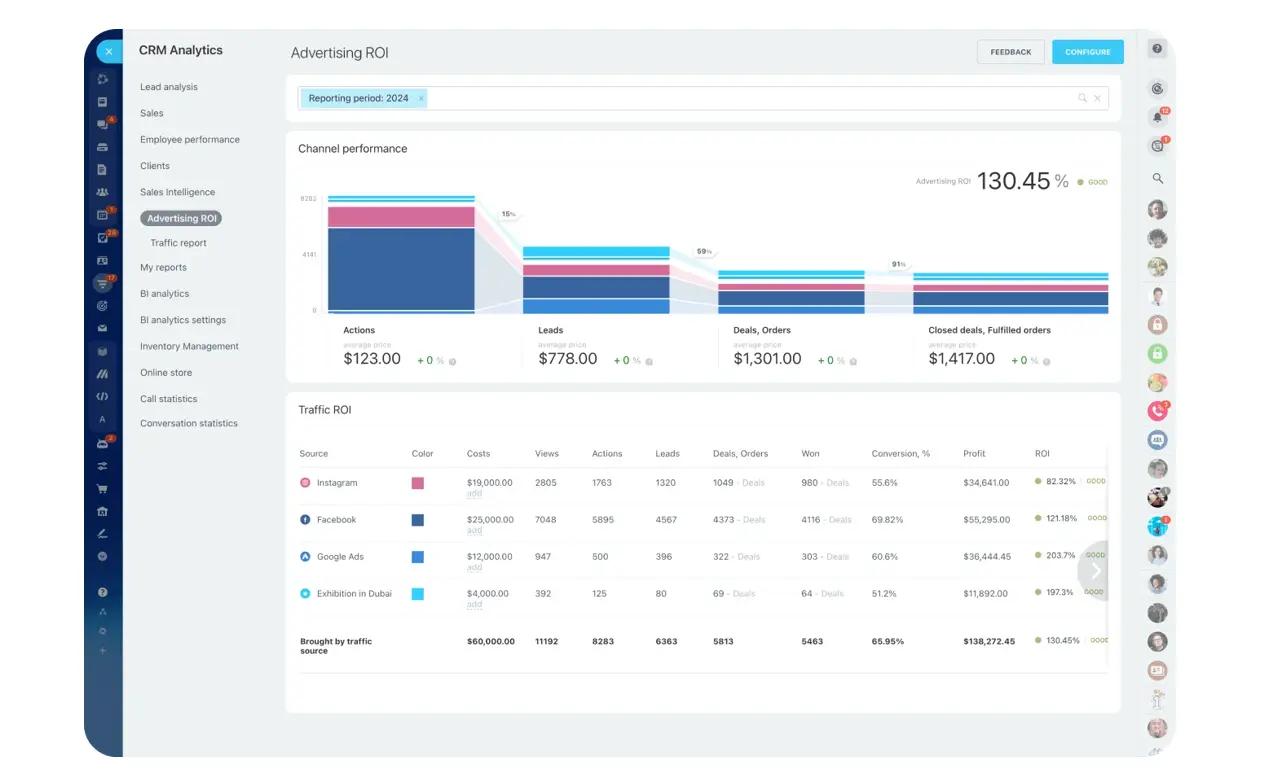
Keeping the team in sync
Daily signals, weekly insights, and quarterly priorities are powerful, but they lose impact if teams operate in silos. Marketing, sales, and operations need shared visibility into what’s happening, what’s changing, and what’s coming next.
To make alignment natural and frictionless:
- Centralize visibility. Consolidate analytics, project updates, and feedback in one workspace so the team sees the same picture.
- Connect insights to action. Turn observations into assignable tasks and link them to measurable outcomes.
- Keep meetings focused. Short, recurring check-ins should review last week’s experiments, plan the next actions, and resolve blockers — not debate every detail.
When visibility, communication, and accountability are built into the rhythm, teams can respond quickly to feedback without confusion, delays, or duplicated effort.
Why rhythm matters more than speed
It’s tempting to equate faster execution with better performance, but growth comes from consistently doing the right things, not just doing more. A feedback rhythm ensures that learning, refinement, and action happen in a deliberate, repeatable cycle.
Key points to keep in mind:
- Slow down to scale. Pausing to review patterns and validate assumptions prevents wasted effort on unproven ideas.
- Focus over volume. A disciplined rhythm filters noise, letting you prioritize experiments and initiatives that truly move the needle.
- Integrate processes. By connecting data collection, analysis, testing, and task management in one system, teams reduce friction and maintain momentum without juggling multiple tools.
When a rhythm is in place, speed becomes a byproduct of alignment and clarity. The team doesn’t just move faster; it moves smarter, consistently turning insights into impact.
Listening Roadmaps Template Pack: Feedback Intake Rules Prioritization Scorecards And Update Notes
Enter your email address to get a comprehensive, step-by-step guide

Experimentation as focus (and turning wins into systems)
Without experiments, teams often rely on opinions, not data. That leads to endless debates, stalled decisions, and wasted effort. Experiments change that. They give you proof.
When you test one variable at a time, such as headline wording, CTA colour, or form length, you can see what actually moves the needle. This clarity helps you prioritize what works and eliminate what doesn’t. Over time, your roadmap naturally becomes sharper and more results-driven.
Using Bitrix24 to test and adapt
Bitrix24 simplifies experimentation by connecting every part of your funnel. With CoPilot in Stores and Sites, you can:
- Instantly generate new landing page versions.
- Personalize page content using AI suggestions based on user behavior.
- Analyze performance with built-in Analytics and Reporting to see which changes drive conversions.
Turning wins into scalable systems
The goal is not just to find one winning idea, but to create a system that consistently wins. Each successful experiment adds a new perspective to your roadmap. Over time, you'll notice patterns emerge: which audiences convert faster, which messages resonate more, and which touchpoints cause problems.
By integrating those findings into your feedback rhythm, you create a cycle of constant improvement. Your roadmap doesn't just respond to feedback; it evolves intelligently.
Bitrix24 makes this evolution seamless. You test, learn, and scale all in one place, so each experiment leads to greater focus and growth.
Attribution basics for smarter roadmaps
Every experiment, campaign, and page click leaves a trail—but without attribution, it’s impossible to know what deserves your attention. Attribution shows which touchpoints truly drive conversions so your roadmap favors evidence over volume and invests in what works.
Choose an attribution model that matches your funnel (first-touch for awareness, last-touch for conversions, or multi-touch for long journeys) and track it consistently.
How Bitrix24 makes attribution clearer
Bitrix24 brings all your data under one roof. Analytics and Reporting allow you to see how each campaign, landing page, and form influences conversion outcomes. Instead of juggling multiple tools, you get:
- Real-time insights into which channels generate the most engaged leads.
- Conversion paths that show how users move from first click to final checkout.
- Reports that connect marketing metrics directly to sales results.
And because it is integrated with CoPilot in Sites and Stores, you can act on these insights right away (adjust content, refine offers, and test new ideas) without having to switch platforms.
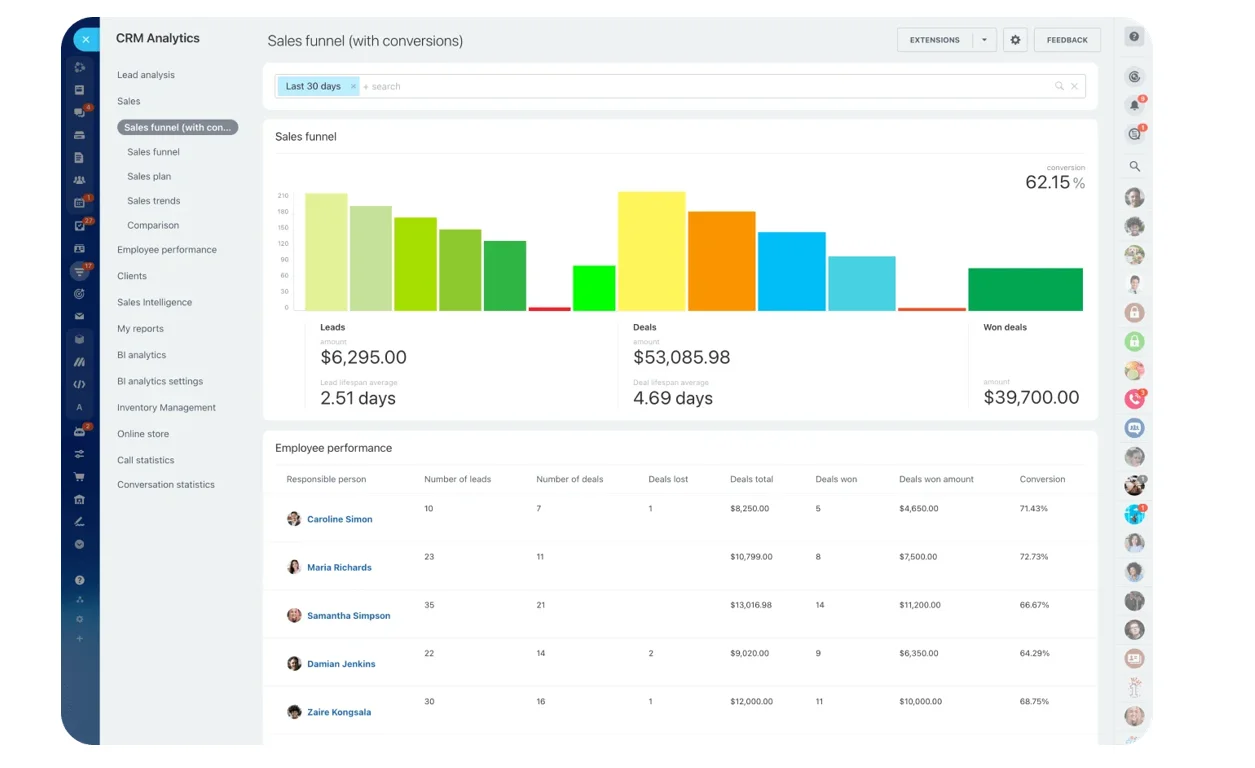
Attribution as a focus filter
Think of attribution as a filter for focus. It helps you separate noise from signal, turning endless feedback into a clear direction.
When your roadmap decisions are supported by attribution data, you stop asking, "What should we do next?" and start asking, “What’s working best, and how can we scale it?”
That’s the power of listening with intent. And at Bitrix24, every insight leads to smarter, faster growth.
The handoff that converts
The real challenge begins when marketing captures attention and sales converts it. A smooth handoff isn’t just operational; it’s strategic, keeping feedback flowing and the customer experience consistent from click to close.
Handoffs fail when lead context, timing, or ownership aren’t shared.
How Bitrix24 keeps the flow continuous
Bitrix24 bridges the gap by providing a single connected workspace. When a lead fills out a landing page form, their data is automatically synced into the CRM, including activity tracking, source attribution, and interaction history.
Here’s what that means in practice:
- Shared visibility: Marketing, sales, and operations see the same data in real time.
- Instant notifications: Sales reps get alerts when a lead completes key actions like form submissions or cart abandonments.
- Automation: Bitrix24’s built-in tools handle repetitive steps, such as assigning leads or updating pipeline stages, automatically.
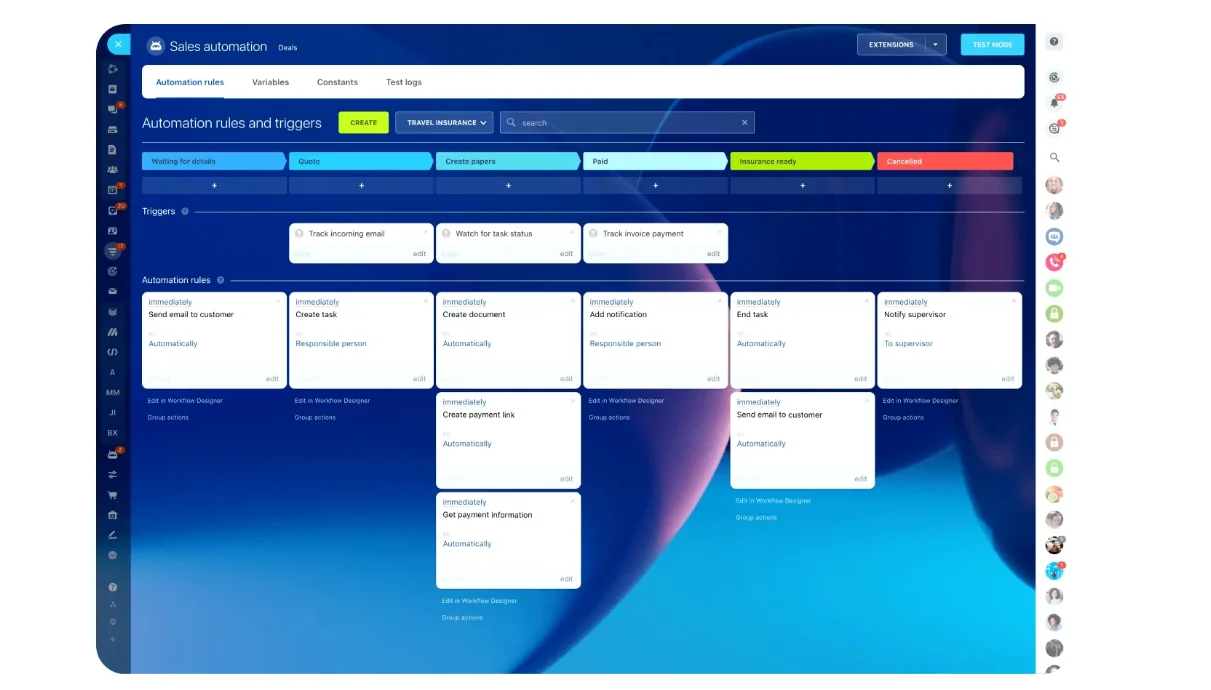
This creates a smooth rhythm where each team plays its part without friction.
Why alignment converts better
When everyone follows the same road map, focus improves. Sales knows which campaigns deliver high-intent leads. Marketing understands which types of buyers close. The result? Shorter cycles, clearer priorities, and higher ROI.
And because Bitrix24 Analytics and Reporting connects all touchpoints, you can see exactly how each handoff contributes to revenue. No more assuming which channels or workflows require attention.
Turning feedback into a focused roadmap
Collecting data is easy. Turning it into direction is where most teams struggle. A focused roadmap bridges that gap. It connects insights from across your funnel to specific, measurable priorities. Instead of reacting to every idea or complaint, you focus on what your audience actually needs and what generates revenue.
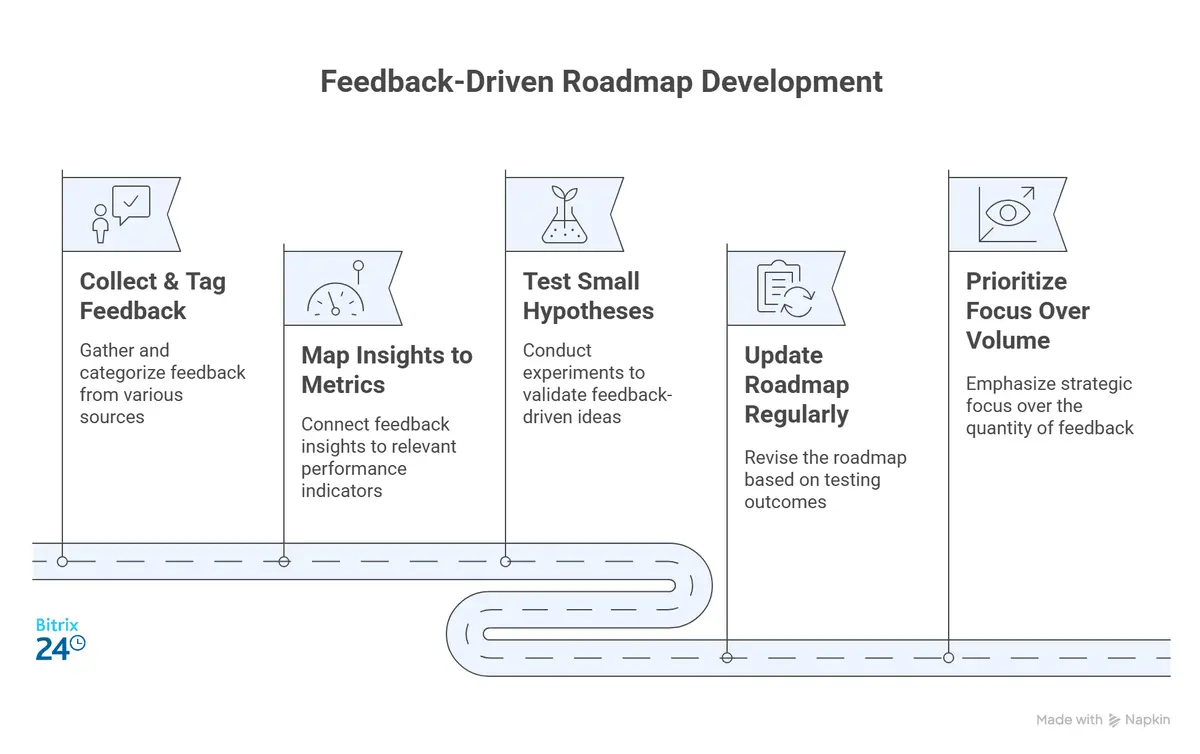
Step 1: Collect and tag feedback
Start by gathering all forms of input, including analytics data, survey responses, customer support notes, and sales insights. Tag this feedback by funnel stage: awareness, consideration, or conversion. This structure helps you to spot trends fast.
With Bitrix24, these trends appear in one dashboard. Web analytics, CRM, and project tracking are all integrated into a single system, eliminating the need for multiple systems.
Step 2: Map feedback to metrics
When feedback is tied to numbers, it becomes more meaningful. Bitrix24's Analytics and Reporting can help you connect qualitative insights to performance metrics like:
- Conversion rate
- Lead-to-sale ratio
- Customer acquisition cost
- Checkout completion rate
When you combine feedback with real data, patterns emerge. You'll be able to determine which issues are urgent and which can wait.
Step 3: Test hypotheses
Until proven, every insight is just a hypothesis. Run small, controlled experiments to verify your assumptions. For example:
- Shorten a form to assess completion rates.
- Rewrite a landing page headline to test click-throughs.
- Adjust checkout design to test drop-offs.
With Bitrix24’s CoPilot in Sites and Stores, you can quickly launch and compare variations without having to code anything.
Step 4: Update the roadmap regularly
Turn your roadmap into a living document. Apply what you've learnt from each test to your weekly or monthly priorities. Drop what doesn't move the metrics, and focus on what does.
Because Bitrix24 integrates projects, tasks, and analytics, updates happen naturally. You can assign follow-ups, track implementation, and assess impact without changing tools or losing visibility.
Step 5: Keep focus over volume
More ideas do not always result in more progress. Focused roadmaps succeed because they filter out noise from data. Every initiative you keep has earned its place through testing, validation, and measurable value.
With Bitrix24, this disciplined focus is effortless. The platform provides the tools you need to listen, test, and act in a unified rhythm. You’re no longer building blindly. You’re building with intent.
The Bottom Line: Listening as a Competitive Advantage
The best teams don’t win by doing more—they win by learning faster. A roadmap that listens turns feedback into focus: real signals become clear actions, results are measured, and progress compounds.
A disciplined feedback rhythm transforms noise into direction. Each loop—capture,test,refine—moves your team from reactive to responsive, aligning every action with what drives growth.
Even as AI and automation reshape work, one principle holds: the teams that listen fastest adapt first.
Bitrix24 makes that possible, uniting insights, tasks, and analytics so you can move from guessing to knowing. Start where impact is highest—landing pages, forms, checkouts—and let data decide your next move.
Build a roadmap that listens.
Start your free Bitrix24 workspace today and turn feedback into your competitive edge.
Getting started with tasks & projects
Enter your email to download a guide that will get you started with any project management software.

FAQ’s
How often should we review feedback to keep our roadmap adaptive?
Weekly is ideal. Short, regular reviews prevent backlog bloat and keep the team tuned to current signals. Bitrix24’s dashboards and reports make it easy to spot shifts in performance without waiting for a quarterly review cycle.
What types of feedback matter most?
Start with data that ties directly to outcomes: conversion rates, form completions, and support themes. In Bitrix24, you can tag and group feedback by funnel stage so trends become clear across marketing, sales, and service.
How do we stop feedback from turning into endless ideas?
Set rules for experimentation. Every idea must be testable and linked to a measurable outcome. Bitrix24’s task and project tools help you assign, run, and evaluate small experiments quickly—then drop what doesn’t work.
What’s the best way to get team buy-in for a feedback rhythm?
Visibility drives alignment. When everyone can see how insights lead to real changes—inside shared Bitrix24 workspaces—momentum builds naturally. Start with one visible success, then expand the rhythm across teams.
Can Bitrix24 replace our current analytics or CRM tools?
In many cases, yes. Bitrix24 unites CRM, automation, analytics, and collaboration so feedback flows through a single system. You can still integrate external tools, but most teams find the built-in reporting and automation are more than enough for fast, feedback-driven growth.