The Nurture Loop: Automated Drip Campaigns for Long-Term Buyers

You already have the leads. They asked about a neighborhood, clicked a listing alert, or filled out a form. Then…crickets. That’s perfectly normal. Most buyers take months to move, and the real risk is disappearing while they’re still deciding.
A nurture loop is an automated, ongoing cycle of useful content that keeps you top-of-mind until timing changes. Instead of a fixed drip sequence that ends after a few weeks, it keeps rotating education, market context, and local insights based on engagement — then flags the right moments for personal outreach.
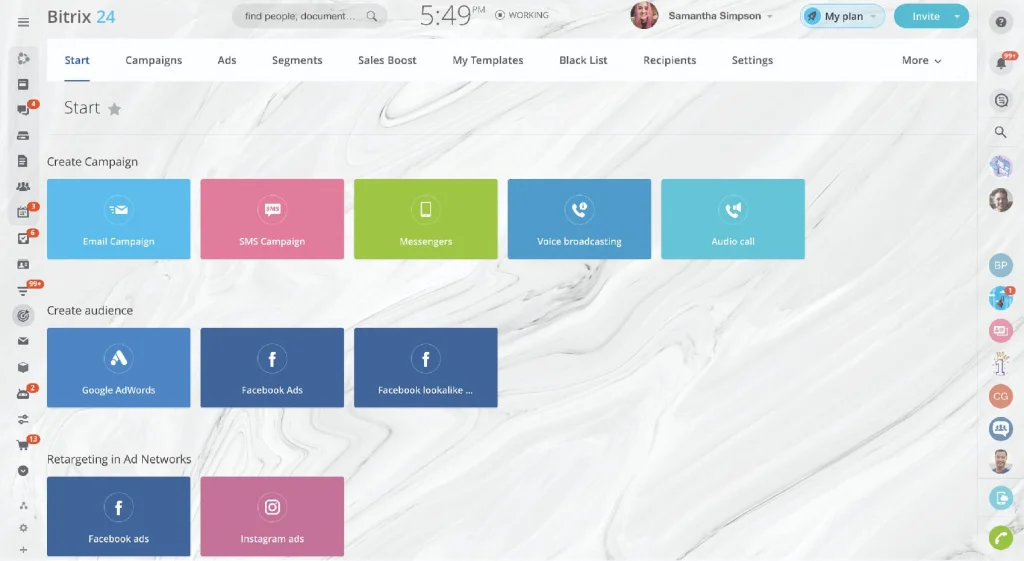
This guide shows you how to build a nurture loop for long-cycle buyer pipelines, and if you’re using Bitrix24, you can keep your CRM, email automation, and follow-up tasks connected in one place so warm signals don’t get missed.
TL;DR: A nurture loop replaces fixed drip sequences with an ongoing, behavior-driven content cycle that keeps long-term buyer leads engaged until they're ready to act, building trust and converting leads other agents abandoned.
Why most buyer leads don't convert quickly
Very few buyers are ready to make an offer the moment they reach out. Most are exploring, aligning financing, and waiting until timing feels right. That delay isn't a failure; it's the natural buying process.
What slows buyers down
Buyer leads commonly pause for reasons that have nothing to do with you:
- Waiting on mortgage rate clarity or pre-approval
- Needing more savings or having a current home to sell first
- Feeling uncertain about market conditions at their price point
- Not emotionally ready to move even when the logic checks out
None of these mean lost interest. They mean the timing isn't right yet.
Where the real problem starts
The problem begins when that pause gets mistaken for disinterest. When follow-up relies on memory or scattered reminders, a buyer who needed time doesn't hear from you for weeks, and the relationship cools, not because they stopped wanting a home, but because they stopped hearing from you.
What the figures say
According to NAR's 2024 Profile of Home Buyers and Sellers (key findings summary), buyers spent an average of 10 weeks searching for a home and viewed an average of seven properties before purchasing. That's over two months of active decision-making. And that doesn't even include the weeks (or months) of passive research that came before!
If your follow-up system runs out of messages after two or three weeks, you're disappearing during the period that matters most.
Pro tip: Top agents don't push buyers to move faster. They build a light structure that keeps them present during the waiting period: clear notes on preferences and constraints, visibility into timeline blockers (financing, lease dates, sale contingencies), and a simple way to track engagement so outreach is timed to interest, not guesswork.

How a nurture loop differs from a traditional drip campaign
Most drip campaigns follow a simple setup: a fixed series of emails goes out on a fixed schedule, and every lead receives the same messages in the same order. When the sequence ends, communication stops.
A nurture loop works differently. Instead of pushing buyers through a one-way sequence, you build an ongoing cycle that keeps you relevant until the buyer is ready. Let’s take a look at the differences between traditional drip campaigns and nurture loops now:
|
Feature |
Traditional Drip Campaign |
Nurture Loop |
|
Structure |
Linear: start to finish, then stops |
Ongoing: content rotates continuously |
|
Timing |
Calendar-based (“day 3, day 7, day 14”) |
Behavior-driven: adjusts based on engagement signals |
|
Duration |
Fixed (typically 2–6 weeks) |
Open-ended (months, until the buyer converts or opts out) |
|
Content |
Same sequence for every lead |
Segmented by buyer stage, preferences, and activity |
|
Goal |
Speed and conversion |
Trust, confidence, and readiness |
|
Re-engagement |
Buyer who misses the window falls off |
Buyer can re-engage at any point without “missing the sequence” |
This distinction matters because long-term buyers don't move in straight lines. They pause, revisit questions, and accelerate when conditions change. A nurture loop accommodates that rhythm rather than fighting it.
The core content types that keep buyers engaged
A nurture loop only works if the content feels genuinely useful. Long-term buyers stay engaged when messages answer real questions and reduce uncertainty. When content feels generic or promotional, it gets ignored. Here are four useful content types to build into your nurture loop to ensure maximum engagement:
|
Content Type |
Purpose |
Examples |
|
Educational |
Build confidence and reduce confusion |
Market updates, first-time buyer checklists, financing guidance, inspection/closing explainers |
|
Lifestyle & local |
Create emotional connection to the area |
Neighborhood spotlights, school/commute overviews, “what $X buys you here right now” |
|
Trust-building |
Reduce perceived risk of a wrong decision |
Buyer success stories, testimonials about smooth guidance, examples of buyers who waited then moved confidently |
|
Gentle prompts |
Invite engagement without pressure |
“Want updates for this neighborhood only?”, “Would a quick price snapshot help?”, “Let me know if your timeline has shifted” |
Why segmented content outperforms generic sends
The strongest loops rotate across all four content types, so messaging stays varied. Educational material dominates early. Lifestyle content carries the middle months. Trust-building and gentle prompts increase as engagement signals suggest the buyer is warming up.
This matters because segmentation drives measurably better results. According to Mailchimp's research on email segmentation, segmented email campaigns achieve 14.31% higher open rates and 100.95% higher click-through rates compared to non-segmented campaigns.
With Bitrix24, you can organize these content types and rotate them automatically based on buyer stage and engagement tracking, so nurturing stays consistent without you rebuilding campaigns every month.
Structuring the loop across buying timelines
Top-performing agents don't rely on a single campaign. They use a flexible structure that matches how buyers actually behave over time.
First 30 days: orientation and trust
Early communication is about clarity and comfort. Buyers are still deciding whether they want to work with you. Send:
- A welcome message that sets expectations
- A simple buying roadmap (steps, timing, common pitfalls)
- A market snapshot tied to their area and price range
- A light check-in that invites questions without pressure
60 to 90 days: context and warming signals
The buyer is collecting information. Questions get more specific, browsing gets more focused. Send:
- Market changes explained plainly
- Neighborhood comparisons with trade-offs
- Financing reminders and planning tips
- Curated listings triggered by activity—clicks, saved links, repeat views
This is where you start spotting who's warming up.
120 days and beyond: consistency over volume
Buyers may go quiet for weeks, then re-engage suddenly. Effective long-term nurturing includes:
- Monthly or bi-weekly value-driven updates
- Lifestyle and seasonal content that keeps the vision alive
- Occasional personal outreach triggered by engagement spikes
The system should be ready when the buyer is. With Bitrix24, buyers move between stages based on engagement signals inside the CRM, not guesswork — so you scale long cycles without losing track of anyone.
Nurture loop launch checklist (before you turn automation on)
- You have 8–12 genuinely useful pieces ready to rotate (not just listing blasts or generic check-ins)
- Each lead has the basics captured in your CRM: preferred neighborhoods, budget range, property type, and any known timing constraints (lease end, financing, sale contingency)
- Your loop is segmented by stage (early, mid, long-term) so buyers don’t get messages that assume they’re further along than they are
- Your content rotation covers all four types: educational, lifestyle/local, trust-building, and gentle prompts—so the loop stays varied over months
- Your default cadence is set to one value-driven email every 10–14 days (with more direct outreach reserved for warm signals)
- You’ve defined the specific engagement signals that matter for your pipeline (opens, clicks, repeat listing views, saved searches)
- When engagement spikes, the system creates a follow-up task for personal outreach instead of sending another automated message
- Buyers who ask for space are automatically moved to a low-frequency segment (monthly at most) rather than staying in the standard loop
- Someone on the team is assigned a consistent rhythm for reviewing engagement alerts (daily or weekly) so warm moments don’t get missed
Automating the loop without losing the human touch
Automation gets a bad reputation in real estate. Many agents worry it makes communication feel cold or overly sales-driven. In practice, good automation removes repetition, not personality.
Personalization that actually works
The most effective loops feel personal because they're relevant. Tailor content based on preferred neighborhoods, budget range, property type, and stage of readiness. When messages reflect real interests, buyers pay attention even months later.
Frequency that respects the timeline
Long-term buyers need space. Too many emails creates pressure; too few makes you forgettable. A balanced cadence is typically one value-driven email every one to two weeks, with more direct check-ins only when engagement increases.
Trigger-based follow-ups that feel natural
Rigid schedules ignore buyer behavior. Trigger-based nurturing responds to it: if a buyer clicks multiple listings in a week, create a task to reach out personally. If they open several emails in a row, send a guide matching their interest. If engagement spikes after silence, check in with context rather than "just following up." This approach feels timely, not intrusive.
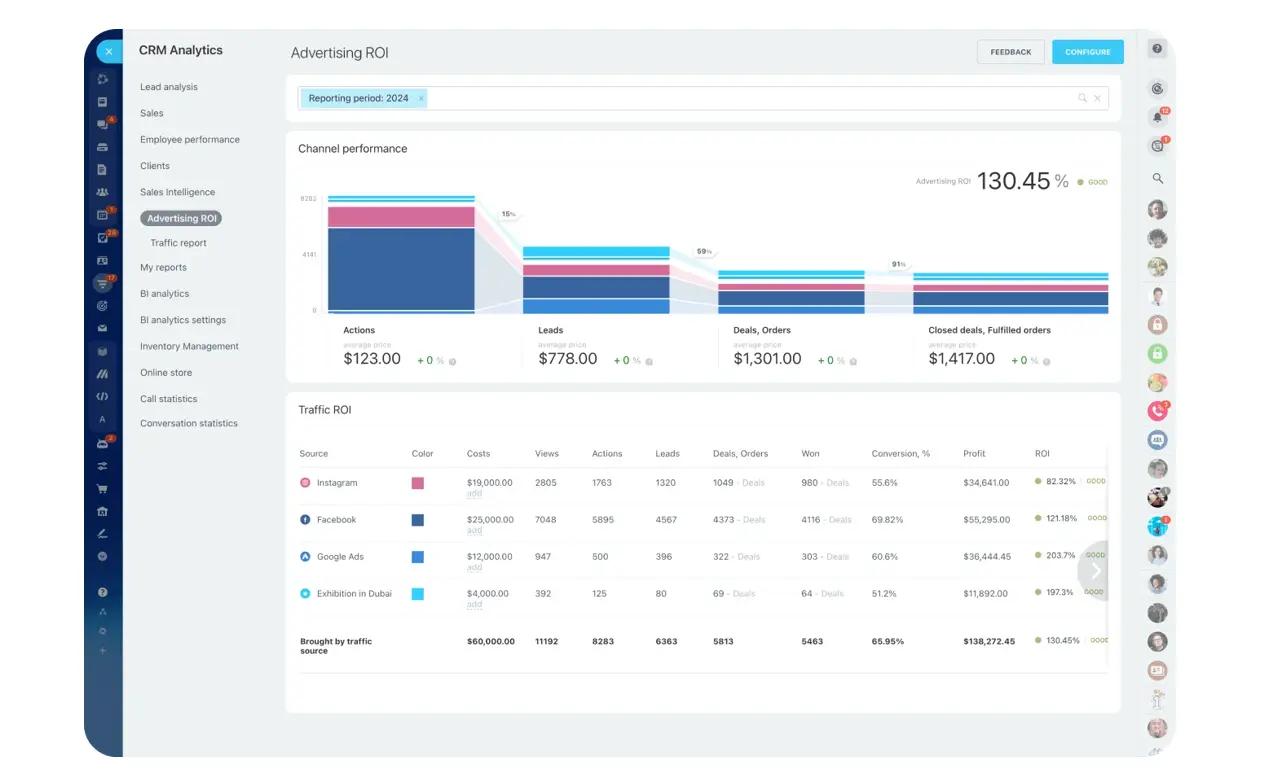
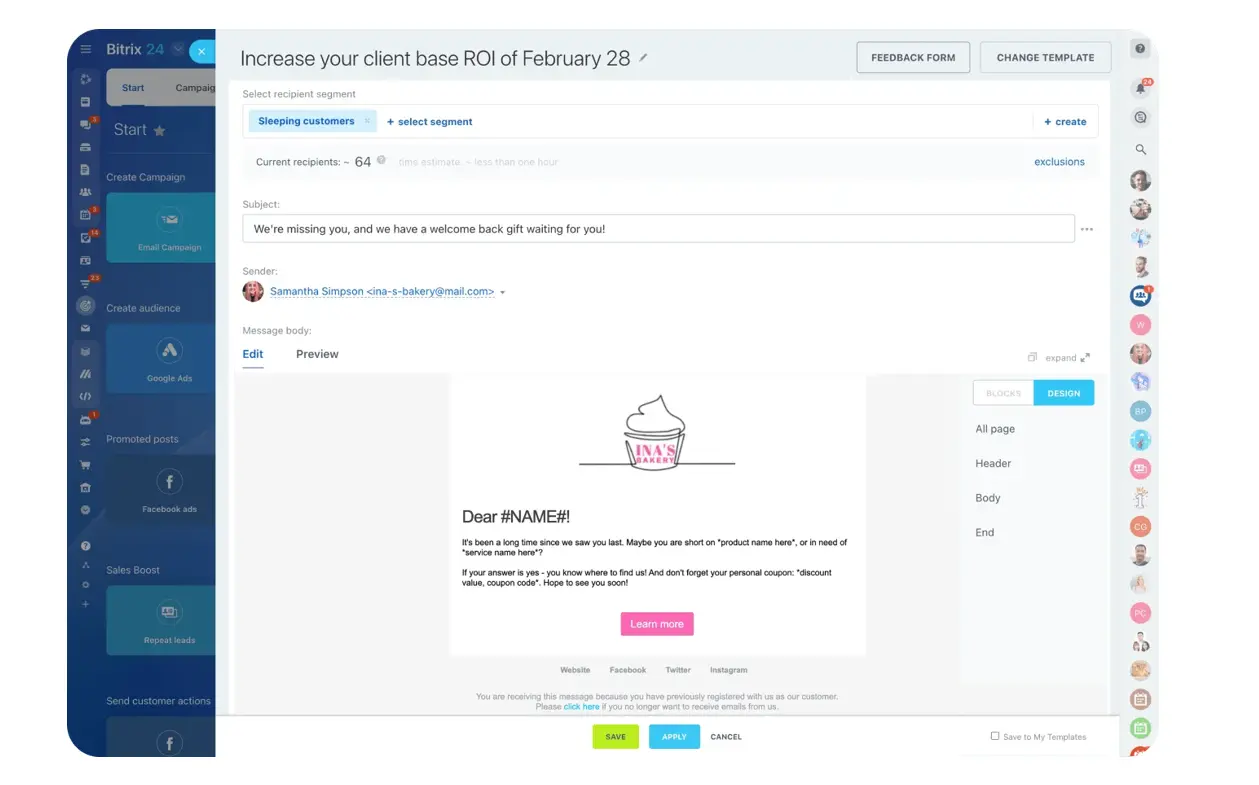
Bitrix24 connects CRM data, email campaigns, and activity tracking in one place. Automation runs in the background while you step in only when human outreach matters most.
Measuring what matters in long-term nurturing
Long-term buyer nurturing requires a different performance mindset. Immediate conversions are rare, and progress happens gradually (often quietly).
Look beyond instant conversions
In long buying cycles, early success shows up in engagement, not offers: open and click trends over time, repeated interest in specific topics, increased activity after silence, and listing engagement that suddenly accelerates. These patterns often appear before a buyer ever says "we're ready."
Spot the right moment to re-engage
When engagement frequency increases, the buyer's situation is usually shifting. Reach out when activity spikes, reference what they interacted with, and offer help aligned with current intent rather than a generic check-in.
Why CRM matters more than most agents think
According to the 2025 REALTORS® Technology Survey published by the National Association of REALTORS®, CRM was the second-highest lead-generating technology reported by agents at 23%, behind only social media at 39%.
For nurture-heavy pipelines where leads need months of consistent contact, CRM isn't just a contact database; it's the system that determines whether a warm signal gets acted on or missed entirely.
When nurture loops don't work
Automated nurturing is high-leverage, but it has limits.
No meaningful content to send. If every email is a listing blast or a generic "thinking of buying?" message, the loop will train buyers to ignore you. Content quality is a prerequisite — if you don't have 8–12 genuinely useful pieces to rotate, build the content library before launching the automation.
Dirty or shallow CRM data. Personalization depends on knowing what each buyer wants. If your CRM records lack preferences, budget ranges, or timeline notes, the loop sends irrelevant content and engagement drops. Invest 5–10 minutes per lead, capturing meaningful details before adding them to a sequence.
Over-automation with no human follow-through. A nurture loop surfaces warm signals, but someone still has to act on them. If engagement spikes go unnoticed because no one checks the dashboard, automation creates a false sense of coverage. Assign a daily or weekly review of engagement alerts.
Buyers who explicitly asked for space. Respect opt-out signals. If a buyer said, "I'll reach out when I'm ready," move them to a low-frequency segment (monthly at most) rather than the standard loop. Ignoring stated preferences erodes the trust you're trying to build.
From patience to predictable growth
Long buying cycles don’t have to feel like dead space. With a nurture loop, “waiting” becomes a system: buyers keep getting useful guidance while you stay present without hovering. Over time, trust compounds. When their situation changes, you’re the agent they already know, and the one they reply to first — so your pipeline starts producing closings from leads other agents quietly dropped.
If you want that same structure in place without juggling tools, Bitrix24 brings your CRM, automated emails, and follow-up tasks together so nurturing stays consistent and warm signals get acted on.
The real question is this: when your next long-term buyer is finally ready, will they still be hearing from you?
Build your first nurture loop and start for free with Bitrix24 today.
Transform Your Sales with Bitrix24
Create powerful nurture loops with Bitrix24's CRM, delivering tailored content that enhances trust and conversions. See how seamless marketing can be, start for free today.
Get Started NowFrequently asked questions
What is a real estate drip campaign?
A drip campaign is a pre-written sequence of emails sent automatically to a lead over a set timeframe — typically 2–6 weeks. Each message is scheduled at fixed intervals (day 1, day 3, day 7, etc.), and the sequence is the same for every lead. A nurture loop extends this concept by making the cycle ongoing, behavior-driven, and segmented by buyer preferences rather than following a single fixed timeline.
How often should I email a cold lead?
For cold leads (buyers who've expressed interest but aren't actively searching), one email every 10–14 days strikes the right balance between staying visible and respecting their timeline. Increase frequency only when engagement signals (opens, clicks, listing views) indicate rising interest. If a lead hasn't opened anything in 60+ days, reduce to monthly and vary the content type to test what re-engages them.
Can I automate SMS messages for open house reminders?
Yes. Bitrix24 supports automated task creation and notification workflows that can trigger SMS-style reminders tied to events in your calendar or CRM pipeline. Keep SMS content brief and logistical: date, time, address, and a link to RSVP or get directions.