IRS Friendly, Freelancer Happy: Benefits As A Service

When you work with 1099 freelancers, you’re walking a tightrope.
You want contractors to say yes fast, do great work, and stay available when you need them again. But you can’t build a setup that starts to feel like employment.
Most teams pick the wrong extreme. They either offer nothing (and lose great talent to teams that do), or they offer perks in a messy, inconsistent way that creates confusion and unnecessary risk.
There’s a better middle ground: Benefits-as-a-Service.
It’s a structured, opt-in way to offer contractor-friendly perks (like tool discounts, training credits, and wellness deals) without creating entitlement or HR-style administration.
In this guide, you’ll learn how to design a simple, trackable perks program (tiers, eligibility rules, disclaimers, and redemption windows) and run it inside Bitrix24 using Online store codes, information management, workgroups, mobile communication, and reporting, so the program stays consistent, auditable, and easy to scale.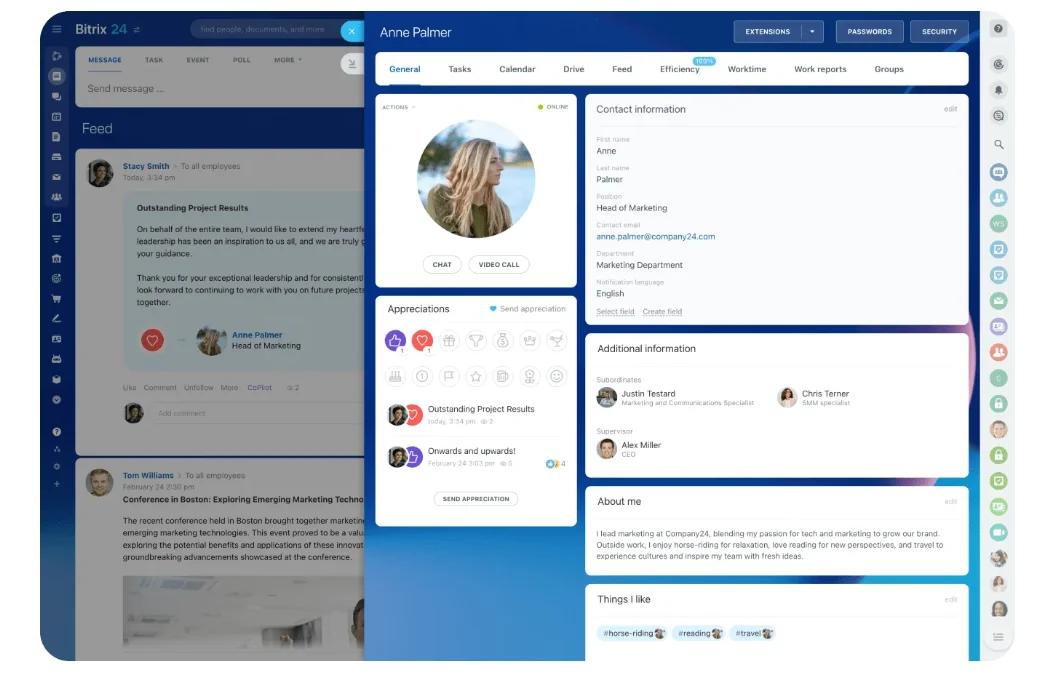
What "IRS-friendly" actually means
Misclassification risk isn’t about being generous. It’s about creating signals that a contractor is being treated like an employee.
Perks become risky when they look like employment benefits in disguise. Common triggers include:
-
Perks framed as an ongoing entitlement (“your standard package”)
-
Eligibility tied to employee-style metrics (hours, tenure, attendance)
-
Access that blurs boundaries (internal-only tools or employee spaces by default)
-
HR-style enrollment, forms, or “benefits administration” language
-
Inconsistent, manager-by-manager offers with no audit trail
The cleaner approach is optional, time-bounded access to negotiated perks. Contractors choose what to redeem, offers expire, and redemption is tracked, so the perk stays a goodwill gesture, not an expected employment-style benefit.
What Benefits-as-a-Service actually is
Benefits-as-a-Service is a simple way to offer freelancer-friendly perks without turning them into “benefits.” Instead of enrollment or an ongoing package, you provide opt-in offers that contractors can redeem on their own terms, with clear rules and a trackable record.
Think of it like a small perks catalog, not an HR program. Common options include:
-
Work support: software discounts or tool credits
-
Growth: course or certification credits
-
Wellness: fitness or mental wellness app deals
-
Lifestyle: gift cards or coworking day passes
This model works because it matches how freelancers want to operate. There’s no paperwork, no implied obligation, and no expectation. Opt-in perks send the right message: "This is optional. You stay independent. Use it if it helps you."
The framework: offering perks without crossing the line
Benefits-as-a-Service works when it stays simple, optional, and clearly managed. Here's the framework.
1. Choose perk categories that stay contractor-safe
Pick perks that support the work relationship without looking like employee compensation. A simple rule helps: the perk should feel like an optional deal a contractor can take or leave; not something you’d “provide” to staff.
Before adding any perk, pressure-test it with this checklist:
Is it optional, with no expectation or entitlement?
Can it be redeemed independently (no approvals, no “enrollment”)?
Is it time-bounded, with clear terms and an expiration date?
Does it avoid employee-style triggers (hours, tenure, attendance)?
Can you document eligibility and redemption cleanly?
Avoid anything that reads like traditional employment benefits or requires HR-style administration (coverage, matching, PTO structures, ongoing monthly allowances framed as “standard benefits,” or anything that implies ongoing entitlement).
2. Make every perk opt-in and time-bounded
This is your biggest safeguard. Opt-in avoids entitlement. Time-bounded offers prevent perks from feeling like an ongoing benefit.
In practice: perks are offered as optional choices, every perk has a clear redemption window (often 30–90 days), perks can rotate quarterly, and contractors can ignore them with no consequence.
Pro tip: Use language like "Optional perks available to eligible independent contractors" and "These are not employment benefits." Avoid phrases like "benefits package," "enrollment," or "company-provided benefits."
3. Tie eligibility to relationship tiers, not employment metrics
Base eligibility on commercial engagement, not workforce metrics. Good triggers include completed project milestones, contractor status (active, inactive, alumni), or skill pool membership. Avoid triggers like tenure, weekly hours, attendance, or internal performance reviews, which all resemble employee compensation structures.
A simple tier model works well: Starter tier unlocks after the first completed project, Core tier after two or three projects, Priority tier for specialized high-value partners. Each tier unlocks different perk options without creating entitlement.
4. Make the program trackable
Most perks programs fail because they aren't trackable. They start with good intentions and turn into spreadsheets, ad hoc emails, and inconsistent offers.
Track contractor status, eligibility tier, perks offered, offer and expiration dates, redemption history, and policy acknowledgment. This gives you clean governance and proof that perks are opt-in and not payroll-linked.
Bitrix24's information management lets you maintain these fields for each contractor, keeping eligibility consistent and the program auditable as it scales.
5. Make execution consistent
Perks programs get risky when every manager handles them differently. Consistency means one perks catalog, one eligibility model, one policy message, one set of FAQs, and one distribution method.
Bitrix24's workgroups let you onboard contractors into a structured collaboration environment. Inside each Workgroup, include your onboarding checklist, project scope, communication norms, perks policy, disclaimer, and redemption instructions. This keeps onboarding consistent without blending contractors into employee workflows.
6. Measure the outcomes
When perks are structured and trackable, the impact becomes measurable: contractors accept faster, fewer drop off after one project, and re-engagement with top talent improves.
Bitrix24's analytics and reporting let you monitor redemption rates, time-to-acceptance, re-engagement conversion, and utilization by tier. You can see which perk categories drive engagement and which are ignored, then optimize rather than guess.
How Bitrix24 powers Benefits-as-a-Service
A perks program only works if you can run it cleanly. If you try to manage contractor perks through email chains and spreadsheets, distribution becomes uneven, managers improvise, and you lose the audit trail that protects your boundaries.
Bitrix24 keeps the entire program connected in one workspace.
Online store codes for perk delivery
Bitrix24's online store model creates a controlled redemption flow. Contractors browse a simple perks catalog with discount codes, partner offers, and training credits. They choose what to redeem on their own terms. A store-style model reinforces that perks are opt-in, time-bounded, and clearly separated from HR enrollment.Information management for eligibility tracking
Track contractor status, engagement tier, perk access rules, and redemption history. When eligibility and redemption are documented, managers don't improvise offers, contractors get consistent access, and the program remains defensible.
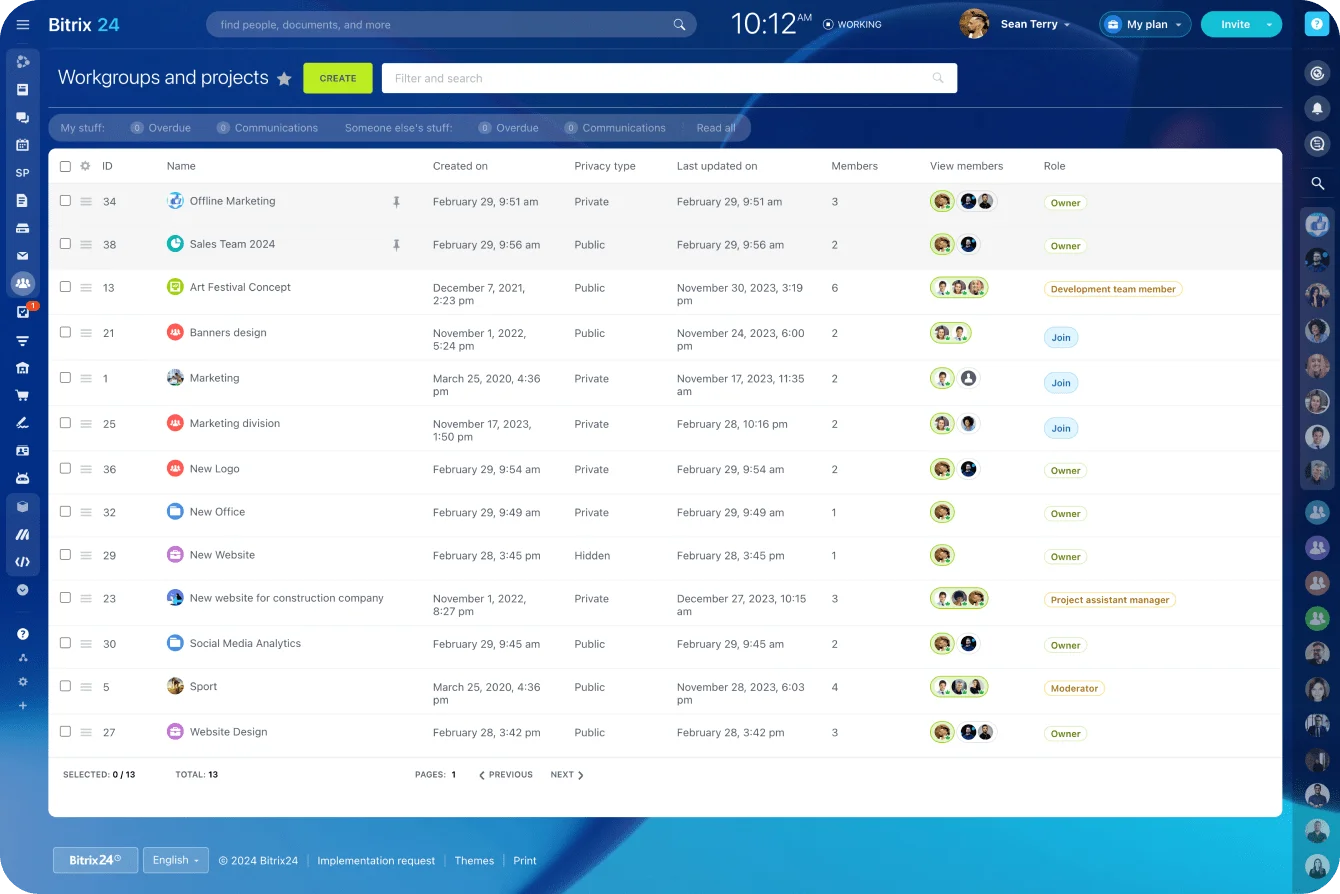
Workgroups for contractor onboarding
Create workgroups per project, client account, or talent pool. Include onboarding materials, policies, and redemption instructions. Contractors get a structured experience without being pulled into internal employee spaces.
Mobile communication for engagement
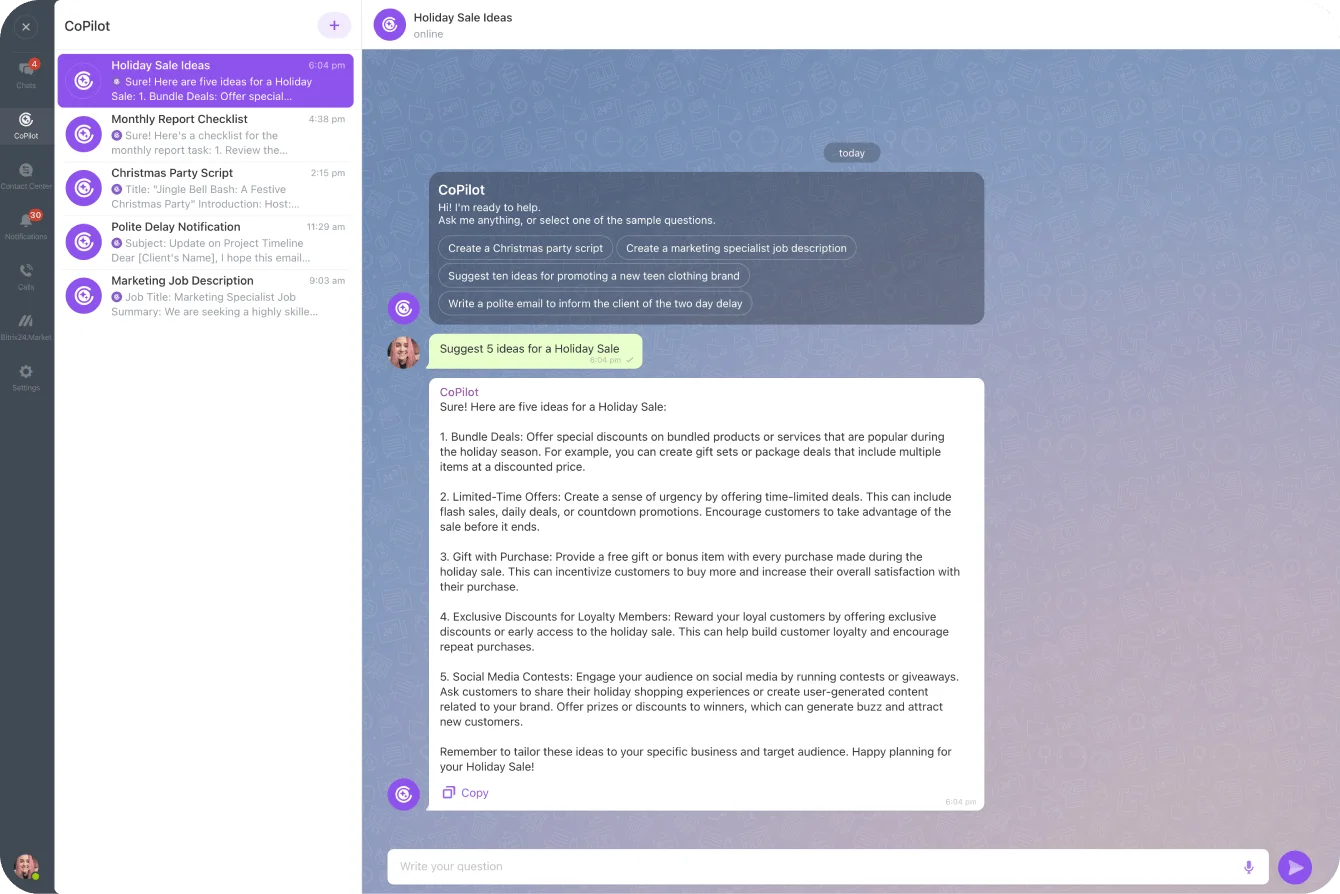
Freelancers don't live in your internal tools. Use mobile messaging to announce new perk drops, notify contractors when they become eligible, remind them before codes expire, and re-engage alumni when work opens up.CoPilot in Chat for policy questions
Contractors ask the same questions repeatedly: "Am I eligible?" "How do I redeem this?" "Is this an employment benefit?" CoPilot in Chat answers common FAQs with consistent language, reducing repetitive admin work and preventing mixed messaging across managers.
Analytics and reporting for utilization
Track redemption rates, time-to-acceptance, and re-engagement conversion. See which perks drive engagement and which tiers respond best. This lets you refine the program based on real data.
Why this works
Most contractor perks programs break down because they’re inconsistent. One manager sends gift cards, another offers nothing, and no one has a clear record of what was offered or why. Over time, that erodes trust and creates unnecessary admin work.
A structured approach fixes that. Clear eligibility tiers, a consistent perks catalog, and time-bounded offers signal professionalism and fairness, without turning perks into an expectation. Opt-in design also keeps boundaries clear: contractors choose what to use, there’s no enrollment or obligation, and delivery stays documented.
The impact shows up quickly in the execution metrics that matter. Teams report project acceptance 10–20% faster once perks are predictable, optional, and easy to redeem. Repeat engagement also improves because contractors have a clearer reason to prioritize your projects, and alumni reactivation becomes easier because you can stay warm without being pushy.
Build goodwill with clean boundaries
Freelancers have options. If you want the best people to accept faster, stay longer, and come back again, you need more than a contract. You need a strong working experience—without blurring classification boundaries.
Benefits-as-a-Service gives you that. It helps you offer meaningful support while staying opt-in, policy-driven, trackable, and clearly not employment benefits.
So how do you apply this? Start small: pick three to five perks contractors actually want, define two or three eligibility tiers based on engagement, deliver through a store-style redemption model, and track everything from day one. Even a basic version can improve acceptance speed and re-engagement within 30 days.
When care is opt-in and auditable, it becomes scalable, safe, and a reason top freelancers choose to work with you again.
Build your contractor care stack today—start for free with Bitrix24.
Boost Freelancer Loyalty
With Bitrix24, create a Benefits-as-a-Service program that's IRS friendly, scalable and trackable. Enhance freelance engagements while remaining compliant.
Try Bitrix24 nowFAQs
Which perks avoid misclassification risk?
Stick to perks that feel like optional professional support, not employee compensation. Think software/tool discounts, learning credits, or a limited lifestyle reward. Avoid anything that looks like traditional benefits (coverage, matching, PTO) or anything tied to hours/tenure. The key is delivery: opt-in, time-bounded, and clearly positioned as an optional offer—not a package.
How do we manage tax documentation?
Keep a simple record of what was offered and what was redeemed, then involve your tax advisor if you offer cash-equivalent rewards or high-value incentives. Treatment varies by perk type and value, so your safest default is strong documentation and escalation for edge cases.
Can we tier benefits by contribution?
Yes, and tiering actually strengthens compliance. Base tiers on commercial engagement (completed projects, contractor status, or skill pool membership) rather than employment-style metrics like hours worked or tenure. A simple model works well: Starter tier after the first project, Core tier after two or three projects, Priority tier for specialized partners. This creates fair progression without resembling employee compensation structures.
What platforms deliver perk codes?
You can deliver codes through a simple internal catalog, a dedicated perks page, or a store-style redemption flow. Bitrix24's Online store lets you publish codes with expiration dates and redemption instructions that contractors access on their own terms. Third-party perk platforms also work, but keeping distribution inside your existing workspace reduces tool sprawl and keeps redemption trackable alongside eligibility data.
How do we measure loyalty uplift?
Track three signals: time-to-acceptance, re-engagement rate, and redemption rate. Compare them before and after launch, and review by tier so you can refine what you offer based on what contractors actually use.