Unlock Leads: Actionable Steps & Sequencing for Qualification


Good leads stall when teams collect interest but don’t move prospects through a defined qualification sequence. Without clear stages, owners, and follow-up rules, promising accounts get delayed, mishandled, or pushed to sales before they’re ready.
A lead qualification funnel fixes that by giving every lead an ordered path. Each stage checks the right evidence: fit, intent, timing, ownership, and readiness for sales. Strong leads reach the right person at the right moment, while weak-fit or low-intent leads stop draining sales time.
This guide gives you the five-step sequence to build into your CRM: define the lead you actually want, map the stages, collect signals in the right order, route cleanly, and measure where leads fall out.
What a lead qualification funnel is
A lead qualification funnel is a structured process for deciding whether a prospect fits your target profile, shows real buying intent, and is ready for deeper sales engagement. It runs as a progression that confirms fit and intent across several touchpoints, rather than a single pass-or-fail filter.
A progression, not a one-time filter
That progression matters because qualification isn't a single decision made at a single moment. It plays out through a series of actions: capture, enrich, assess, contact, confirm, route, and advance.
The order changes the result. Ask for too much too early and conversion drops. Send leads to reps before confirming basic fit and you waste sales capacity on accounts that were never going to close.
Where scoring and gut feel fall short
Plenty of teams confuse qualification with lead scoring. A scoring model helps you prioritize, but it's only one input. A score doesn't tell you whether the right person engaged, whether the account has an active use case, or whether a conversation confirmed timing. It gives you a signal, not a full decision path.
Others lean too hard on rep judgment. That can work with a handful of experienced sellers who know the product cold. It doesn't scale. Judgment without structure produces inconsistent outcomes, and the inconsistency gets worse across territories, segments, and handoffs between SDRs and account executives.
In practice, a working funnel pairs criteria with sequence: Criteria tell you what to look for. Sequence tells you when and how to look for it.
Why lead qualification processes break down
Unclear criteria
The first failure point is fuzzy definitions. Teams say they want "high-quality leads," but nobody has translated that into something operational. Does qualified mean an ICP match? Budget confirmed? Meeting booked? A decision-maker engaged?
When the answer changes depending on who you ask, every handoff turns subjective and every report becomes an argument.
Process gaps
Then there are the mechanical gaps. Enrichment runs on some leads and not others. Form data comes in half-empty. Routing rules don't reflect territory or segment logic. Follow-up depends on whether someone happened to notice a notification.
These look like small workflow issues, but they quietly drain conversion across thousands of leads.
Speed
Speed is the most visible weak spot, and the data is blunt about it. Harvard Business Review found that firms contacting a new lead within an hour were nearly seven times more likely to qualify it than those that waited an hour longer, and more than 60 times more likely than those that waited 24 hours.
A companion audit of 2,241 U.S. companies in the same research clocked the average first response at 42 hours. Intent fades fast, especially on high-interest actions like demo requests or pricing-page visits, so a lead that lands at 4:45 PM and sits until the next afternoon has often already gone cold.
Disconnected systems
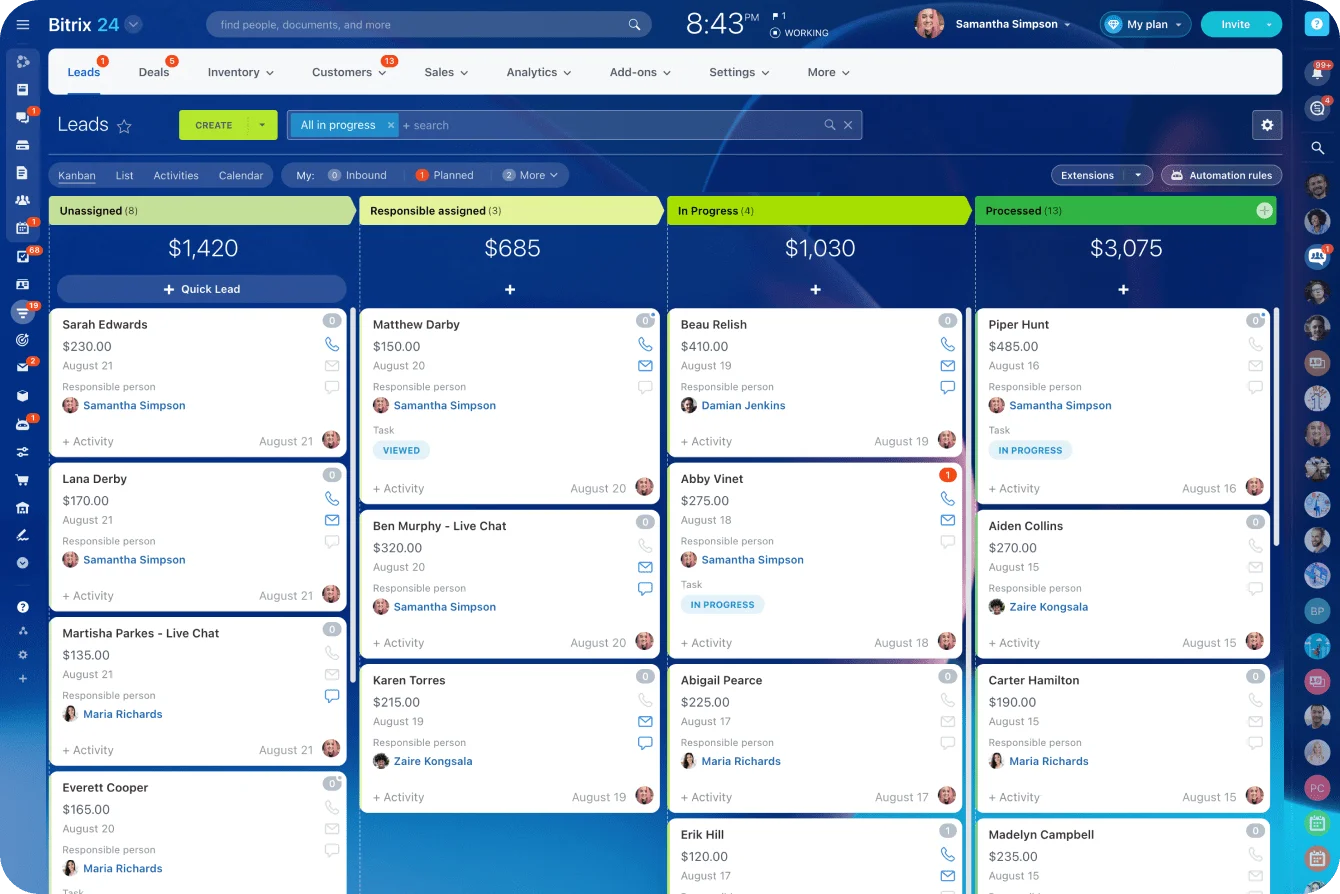
Disconnected tools make all of this worse. Marketing automation, the CRM, enrichment services, and rep workflows each hold a different version of the same lead. One says the account is enterprise; another has no employee count; the rep sees partial context and makes a call based on guesswork.
Consolidating lead data in a single CRM removes most of that ambiguity, because everyone is reading from the same record.
Pushing leads that aren't ready
There's also a behavioral problem teams don't always admit. Prospects get pushed forward because the company wants more pipeline, not because the buyer has shown readiness. If need, urgency, authority, or timing hasn't been confirmed, advancing the lead just manufactures false momentum that collapses at the first real conversation.
Qualification breakdown is rarely one big dramatic failure. It's a chain of small inconsistencies that compound stage by stage.
Lead Qualification Scorecard + Auto-Prioritization Spreadsheet Template
Enter your email address to get a comprehensive, step-by-step guide

Step 1: Define your ideal lead and qualification thresholds
Write criteria in shared language
Start with explicit fit criteria, and be concrete.
Company size, industry, geography, tech environment, use case, budget range, and buyer role shouldn't live as vague assumptions in one person's head. Write them down in language a marketer, an SDR, and an AE would all read the same way.
This is usually a RevOps or sales-leadership job, and it's worth a half-day workshop with all three functions in the room.
"Mid-market software company" is too loose to act on. "B2B SaaS, 100 to 1,000 employees, North America, selling through inside sales, with at least one full-time RevOps or sales operations owner" is something a rep can actually check against a record.
Separate must-haves from nice-to-haves
Next, separate must-have signals from nice-to-have indicators. This distinction matters more than most teams think. Must-haves are conditions without which a lead shouldn't reach direct sales review. Nice-to-haves raise priority, but they shouldn't muddy the decision.
|
Category |
Must-have |
Nice-to-have |
|---|---|---|
|
Firmographic fit |
Target industry and company size |
Known tech stack match |
|
Buyer role |
Relevant functional owner or influencer |
Director level or above |
|
Use case |
A clear problem your product solves |
Multiple possible use cases |
|
Commercial fit |
Budget range aligns broadly |
Budget confirmed in conversation |
Set thresholds for three outcomes
Once that's set, document thresholds for three outcomes: nurture, sales review, and disqualification.
Don't leave gray zones floating around for reps to interpret. A lead that matches ICP but lacks active timing is usually nurture. An account outside your core segment with no valid use case gets disqualified. Basic fit plus real intent goes to sales review.
A manufacturer fielding RFQ forms runs into this constantly: many submissions are students, researchers, or competitors, not buyers. Written thresholds let the team route a genuine procurement inquiry to sales the same day while parking everything else, instead of treating every form fill as a hot lead. This step gives the rest of the funnel something stable to stand on.
Pro tip: Add a “why now?” field
Fit tells you whether the account is worth pursuing. “Why now?” tells you whether it should move today. Add a required CRM field for the trigger behind the enquiry: new budget, current provider issue, urgent deadline, leadership change, expansion plan, compliance need, or active project. That one field helps reps separate general interest from real buying pressure.
Step 2: Map the funnel stages and entry triggers
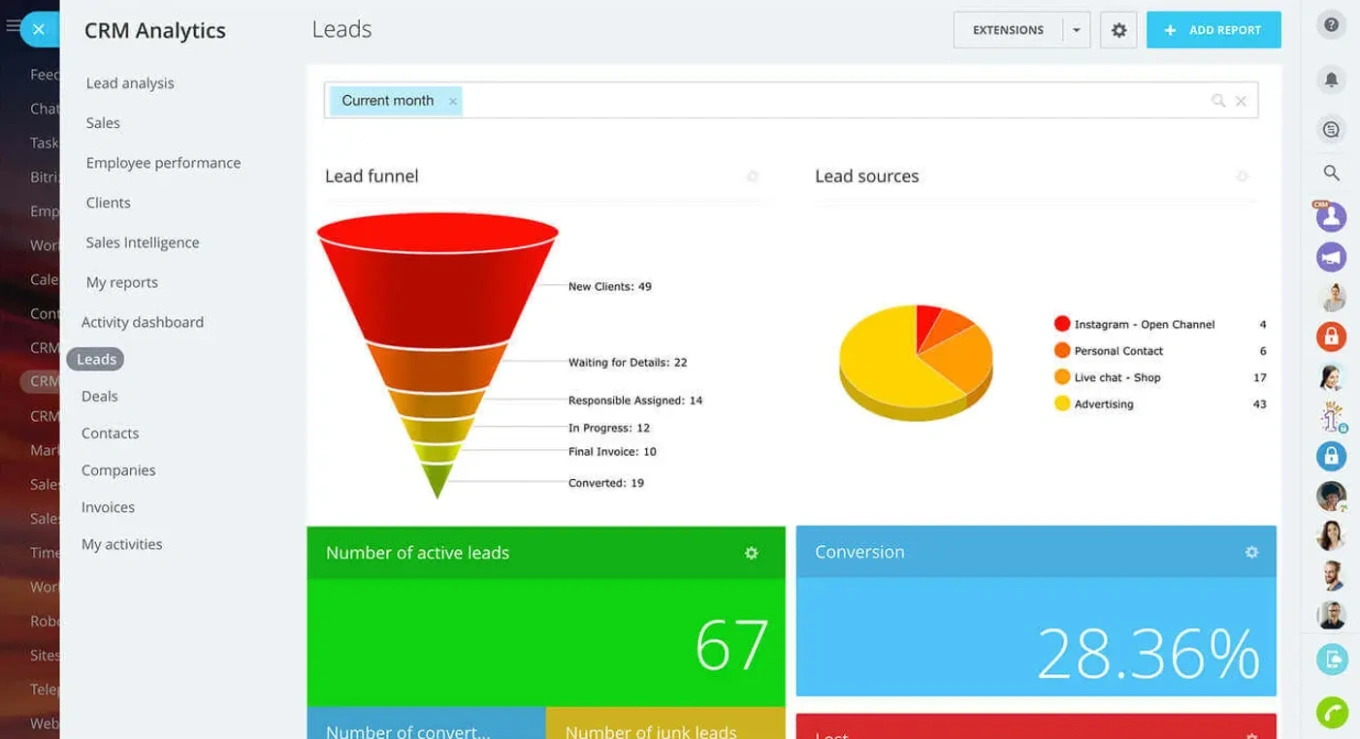
Now define the stages a lead moves through. A practical model is inquiry, marketing-qualified lead (MQL), sales-accepted lead (SAL), sales-qualified lead (SQL), and opportunity. The labels matter less than the rule that each stage means one specific, agreed thing.
Modeling these as a sales funnel inside your CRM keeps the definitions visible to everyone instead of buried in a slide deck nobody reopens.
Trigger on evidence, not opinion
Entry triggers have to be based on observable evidence.
- A lead becomes an inquiry when it enters the system through a tracked source.
- It becomes marketing-qualified when fit and minimum engagement thresholds are met.
- It becomes sales-accepted when the assigned rep reviews it and takes ownership.
- It becomes sales-qualified when a real conversation confirms need, timing, and a buying path.
- It becomes an opportunity when there's a defined sales pursuit.
Keep trigger logic simple enough to audit. If a lead becomes an MQL because of a hidden score built from ten minor behaviors, nobody will trust the stage. If the trigger reads "target account + demo request" or "ICP fit + pricing intent + valid contact," adoption is far easier and disputes mostly disappear.
Assign ownership stage by stage
Spell out who owns what. Marketing typically owns inquiry and early qualification. SDRs own acceptance and first contact. AEs own deeper qualification and opportunity creation. When ownership is explicit, no lead sits in the gap between two teams waiting for someone else to move.
Stage map summary:
- Inquiry: lead enters the system through a tracked source
- MQL: basic fit and an intent threshold are reached
- SAL: a rep accepts the lead and commits to follow-up
- SQL: direct conversation confirms a viable pursuit
- Opportunity: an active deal process begins

Step 3: Build the qualification sequence around Progressive Signals
This is where the funnel becomes usable. Qualification should gather information gradually, using each touchpoint to confirm one thing at a time. Asking for every detail on the first form or the first call creates friction and tanks response rates.
Think in progressive signals. Early forms can capture role, company, and high-level interest. Enrichment appends industry, employee count, revenue band, and tech details. Email replies reveal urgency or internal ownership. Call outcomes confirm whether there's a live initiative. Meeting behavior shows whether multiple stakeholders are involved. Each step has one qualification goal, not five.
- Capture baseline fit: gather basic identity and source data through form fills or inbound actions.
- Enrich the account: append firmographic and account-level detail automatically wherever possible.
- Test intent: read response behavior, page activity, and CTA type to separate curiosity from active evaluation.
- Confirm buying context: in outreach or discovery, validate need, timing, and who's involved.
- Advance or recycle: route forward only when the full signal set supports it.
Why order beats volume
A simple pattern shows why order beats volume.
Someone downloads a guide. On its own, that shouldn't trigger aggressive sales outreach. But if that same contact sits inside your ICP, returns to the pricing page, replies to an email about implementation timing, and books a meeting, the sequence has assembled a real case rather than a single weak signal.
A B2B SaaS team running monthly webinars sees the opposite mistake all the time: dumping every attendee straight into the SDR queue. Most attendees showed up to learn, not to buy. Sequencing the signal (attended + visited pricing + opened a follow-up) tells the SDR which handful actually warrant a call this week.
Progressive sequencing also improves the buyer's experience, since prospects aren't forced through a full qualification interview before they have enough interest to answer it well.
Step 4: Create routing, follow-up, and exit rules
Once signals are collected, the lead needs a consistent next move. This is where a lot of funnels fall apart operationally. Teams do the hard work of defining stages, then leave routing and follow-up too loose to enforce.
Routing
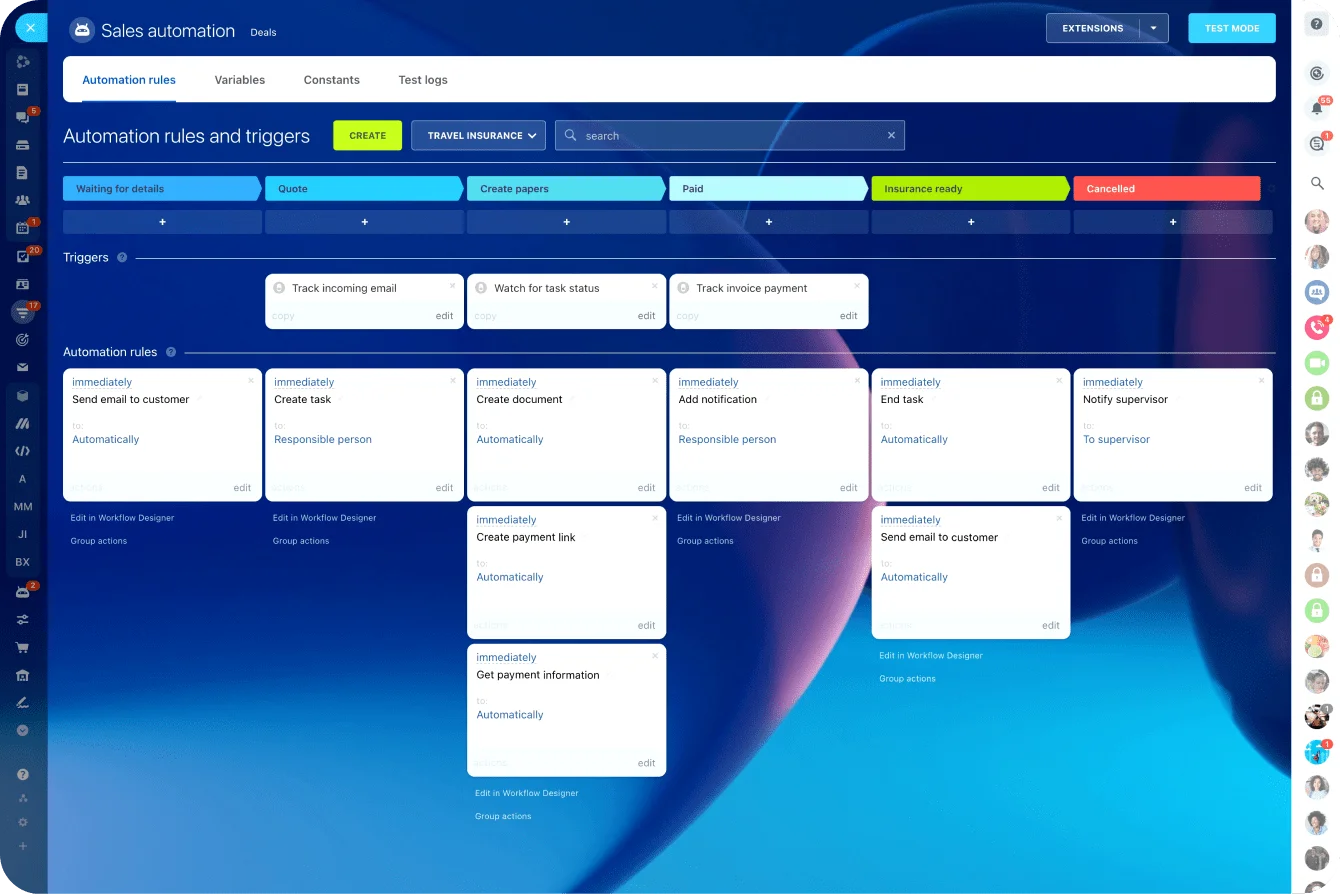
Start with automated routing. Hot leads should move immediately to the right rep or team based on territory, segment, product line, or named-account ownership. Warm leads route to SDR review. Nurture leads enter the right campaign stream. Partner-sourced leads may need a separate path.
Disqualified leads shouldn't linger in active queues. Setting up automated routing and lead assignment removes the "who picks this up?" delay that kills speed-to-lead.
Response-time SLAs
Response expectations should match intent. A demo request from a target account can't wait until tomorrow because it arrived late in the day; a low-intent content download doesn't need the same urgency.
Build SLAs that reflect source and signal strength, and given the HBR numbers above, the SLA for high-intent inbound is realistically minutes, not hours.
Follow-up cadence
Define cadence in plain terms. How many touches, over how many days, through which channels?
A common pattern is five to eight attempts across email and phone in the first 48 hours, because most reps quit far too early. If reps improvise every time, reporting gets muddy and performance swings more than it should.
Exit rules
Exit rules matter just as much. Leads should leave a path for a stated reason, with a coded outcome attached:
- Recycle to nurture with a recheck date
- Pause for timing and set a reminder
- Route to a partner or channel team
- Disqualify with a coded reason
- Remove from the active sales queue
Coded exit reasons are what keep your funnel clean and your reporting honest. "Not interested" tells you nothing; "wrong segment" or "no budget this fiscal year" tells you whether to fix targeting or timing.
Pro tip: Review rejected leads before changing the funnel
Before tightening or loosening your qualification rules, review a sample of rejected leads from the past month. Look for patterns: wrong segment, no budget, no authority, poor timing, duplicate records, or slow follow-up. If good leads are being rejected for fixable process reasons, the funnel doesn’t need stricter criteria. It needs cleaner routing, better data, or faster ownership.
Step 5: Align messaging, measurement, and optimization
Match messaging to the stage
Qualification works better when messaging matches the lead's actual stage. Early outreach should acknowledge interest and help the buyer frame the problem. Mid-stage messaging addresses use case, urgency, and internal alignment. Later-stage qualification should sound consultative and specific, not like cold prospecting bolted onto a warm lead.
Marketing and sales need the same stage logic. If marketing treats an MQL like an education-stage nurture contact while sales treats it like a ready buyer, the prospect gets mixed signals, and that inconsistency slows everything down. Documenting shared rules in a CRM and marketing automation workflow keeps both teams pointed at the same definition.
Measure where momentum drops
Measurement should stay close to execution. Track conversion between stages, speed-to-lead, sales acceptance rate, meeting-set rate, and fallout points.
You want to see where momentum drops, not a headcount of what entered the top. Pulling these from your CRM analytics and reports beats stitching together spreadsheets after the fact.
|
Metric |
What it shows |
|---|---|
|
Inquiry-to-MQL rate |
Whether thresholds are too loose or too strict |
|
Speed-to-lead |
Whether response process matches buyer intent |
|
MQL-to-SAL acceptance rate |
Whether marketing and sales agree on quality |
|
SAL-to-SQL rate |
Whether reps are receiving workable leads |
|
Stage fallout reasons |
Where qualification logic or routing is failing |
Review these patterns on a set cadence, monthly for most teams, and adjust thresholds, timing, and channel mix based on what actually happened, not gut feel. If pricing-page leads convert well with same-day calls, protect that path. If webinar leads need nurture before a rep ever calls, build for that.
Common mistakes in lead qualification sequencing
Treating every inbound lead as sales-ready
Volume makes teams impatient. A form fill looks like intent, but not all intent is equal, and without validating fit first, sales gets flooded with activity that looks busy and converts at a fraction of what it should.
Front-loading too many criteria
Teams try to capture budget, authority, timeline, use case, stack details, and implementation scope before the buyer has even decided a conversation is worth having. That kills early conversion. Early qualification should be light (but useful).
No closed-loop feedback
Marketing keeps sending leads based on old assumptions, sales keeps quietly rejecting them, and nobody updates the definitions, routing, or thresholds. That's how a weak process survives for months without anyone owning the fix.
Sloppy or missing exit reasons
If reps mark bad leads as "not interested" when the real issue is wrong segment, your reporting points you at the wrong problem and you "fix" the part that wasn't broken.
Put plainly: if your funnel depends on a few hero reps cleaning up bad routing and vague criteria, you don't have a qualification system. You have a workaround that breaks the moment those reps leave.
How to scale a reliable qualification funnel across teams
Standardize definitions and fields
Scaling starts with standardization. Definitions, stage logic, routing rules, and core CRM fields should work the same across regions and segments unless there's a real business reason to differ. If every team invents its own version of MQL or SQL, comparison and accountability vanish.
Shared field design matters more than people expect. Use consistent values for disqualification reasons, lead source, buyer role, segment, and lifecycle stage. Clean, consistent data is what lets you trust routing and reporting once volume climbs.
Automate the repeatable work
Automation should handle the repeatable work: enrichment, assignment, alerts, task creation, and SLA tracking. Task and process automation saves time and cuts missed handoffs, but don't automate away judgment. A rep or reviewer still needs the ability to override edge cases when an account is strategically important or the signal pattern is unusual.
Audit on a schedule
As volume grows, audit the funnel on a schedule, usually quarterly. Check whether stage definitions are still applied correctly. Review whether follow-up SLAs are being met. Spot-check routed leads for quality.
Watch for regional drift, where one team quietly changes its behavior because the workflow stopped matching reality.
Scaling checklist:
- Standard CRM fields and lifecycle definitions
- Automated enrichment and assignment logic
- SLA monitoring and exception alerts
- Quarterly audits of routing and stage accuracy
- A working feedback loop between marketing, SDRs, and AEs
Reliable funnels don't stay reliable by accident. They stay reliable because someone owns the process after launch.
Turn qualification into a repeatable revenue system
Lead quality improves when qualification is sequenced, measurable, and clearly owned across teams. That’s the practical shift: you stop treating qualification as a vague judgment call and start running it as an operational system.
The playbook is straightforward. Define the lead you actually want, set stage triggers, collect signals in the right order, route leads cleanly, and measure where movement breaks.
Do that well and better leads reach sales at the right moment, while weaker ones stop consuming expensive selling time.
Bitrix24 gives you a natural place to build that system, with CRM records, lead capture, pipelines, tasks, automation, communication, and reporting working together. You can define qualification rules, assign follow-ups, track lead movement, and keep sales and marketing aligned from one shared workspace.
Start for free and turn lead qualification into a cleaner, faster path from first interest to real sales opportunity.
Qualify leads faster with Bitrix24 CRM
Bitrix24 unites lead capture, CRM routing, tasks, automation, and reports so teams qualify faster and focus reps on real opportunities.
Start NowFAQ
How long should a lead stay in nurture before it's rechecked for sales readiness?
There's no single number, but 30 to 90 days is a practical range depending on buying cycle and product complexity. Recheck on fresh behavior, not elapsed time alone. A dormant lead that suddenly revisits pricing or replies to a campaign should be reviewed right away.
What tools are most useful for qualification when CRM data is incomplete or outdated?
Enrichment tools, website intent signals, form optimization, email engagement data, and conversation intelligence. None of these replaces CRM discipline, but they fill gaps fast enough to support routing and prioritization. When CRM quality is poor, enrichment plus required-field governance usually delivers the quickest improvement.
How should teams handle leads that match the ICP but show weak engagement signals?
Don't force them into active sales pursuit. Place them in targeted nurture, ideally with messaging tied to the likely use case for that segment. A strong-fit account deserves attention, just not the same treatment as a high-intent buyer who's ready to talk.
What's the best way to qualify inbound demo requests outside business hours?
Automate immediate acknowledgment, run enrichment instantly, and route by priority before the team is online. Flag high-fit requests for first response the moment coverage starts. If volume justifies it, use follow-the-sun coverage or an outsourced first-response layer for your top-intent paths, since the HBR data shows the first hour is where qualification odds live.
How often should qualification thresholds be updated for new products or market segments?
Review them as soon as a new offer or segment goes live, then again after the first meaningful batch of leads and outcomes. After that, a quarterly review is usually enough unless conversion or acceptance rates shift sharply.