How to Automate Lead Nurture Without Sounding Robotic


Marketing automation works best when nobody on the receiving end notices it's automation at all. The whole point is to scale relevance, not to scale form letters. When a lead nurture sequence reads like it was written by a person who actually understands the recipient's situation, the tool has done its job; when it reads like a templated greeting card with the recipient's first name jammed into slot {{firstname}}, the tool has betrayed it.
This piece lays out eight practical rules for building marketing automation that earns replies instead of unsubscribes, with concrete examples, a comparison of time-based and behavior-based sequences, and a starter setup you can actually ship inside a CRM.
A quick scenario before we get into it. A B2B prospect downloads a comparison guide on a Tuesday afternoon. By Tuesday night, they've received a generic welcome email. By Wednesday morning, two more "just checking in" notes. By Thursday, the prospect has either unsubscribed or marked the sender as spam. The content was fine, the cadence was the problem, and the CRM happily kept firing since nobody had set behavior-based triggers or pause rules. The fix is rarely better copy. It's better orchestration.
What Marketing Automation Means in This Context
Marketing automation is the practice of using software, usually a CRM with built-in workflow rules, to deliver the right content to the right contact at the right moment without somebody clicking send each time. For B2B teams, it sits between marketing and sales, owning everything from the form-fill on a landing page to the moment a contact becomes a qualified opportunity. It applies whenever you have more leads than a human can personally follow up with, more channels than one person can monitor, and a buying cycle long enough that timing matters as much as messaging. Done well, the outcome is a steady flow of warmed-up conversations handed to sales with context attached. Done poorly, it produces the robot voice we're trying to avoid.
The interesting part is that the difference between "feels personal" and "sounds robotic" rarely lives in the copy itself. It lives in the rules that decide who gets which message, when, and after what action.

Why Rigid Sequences Sound Robotic in Marketing Automation
Most automation that feels off shares a few traits. It runs on calendar dates instead of recipient signals. It treats every contact who fills out the same form as if they have the same intent. It keeps sending even after the recipient has clearly moved on, or worse, has already become a customer. It drops in the prospect's name and company once, then talks at them for five emails straight.
Recipients can sense the seam. The seam is where the system stops responding to them and starts running on its own. Closing that seam is what separates automation that supports a relationship from automation that imitates one badly.
16 Human-Sounding Nurture Email Scripts + Personalization Map
Enter your email address to get a comprehensive, step-by-step guide

Eight Rules for Marketing Automation That Feels Human
These eight rules cover the orchestration layer that decides whether marketing automation lands as helpful or hollow. Each one is independently useful, and they compound when applied together.
1. Build on Signals, Not Calendar Cadence
The first instinct most teams have when setting up a nurture flow is to space messages by days. Day 1, day 3, day 7, day 14. Calendar cadence is easy to configure and easy to explain, but it ignores the only data point that actually matters: what the recipient just did.
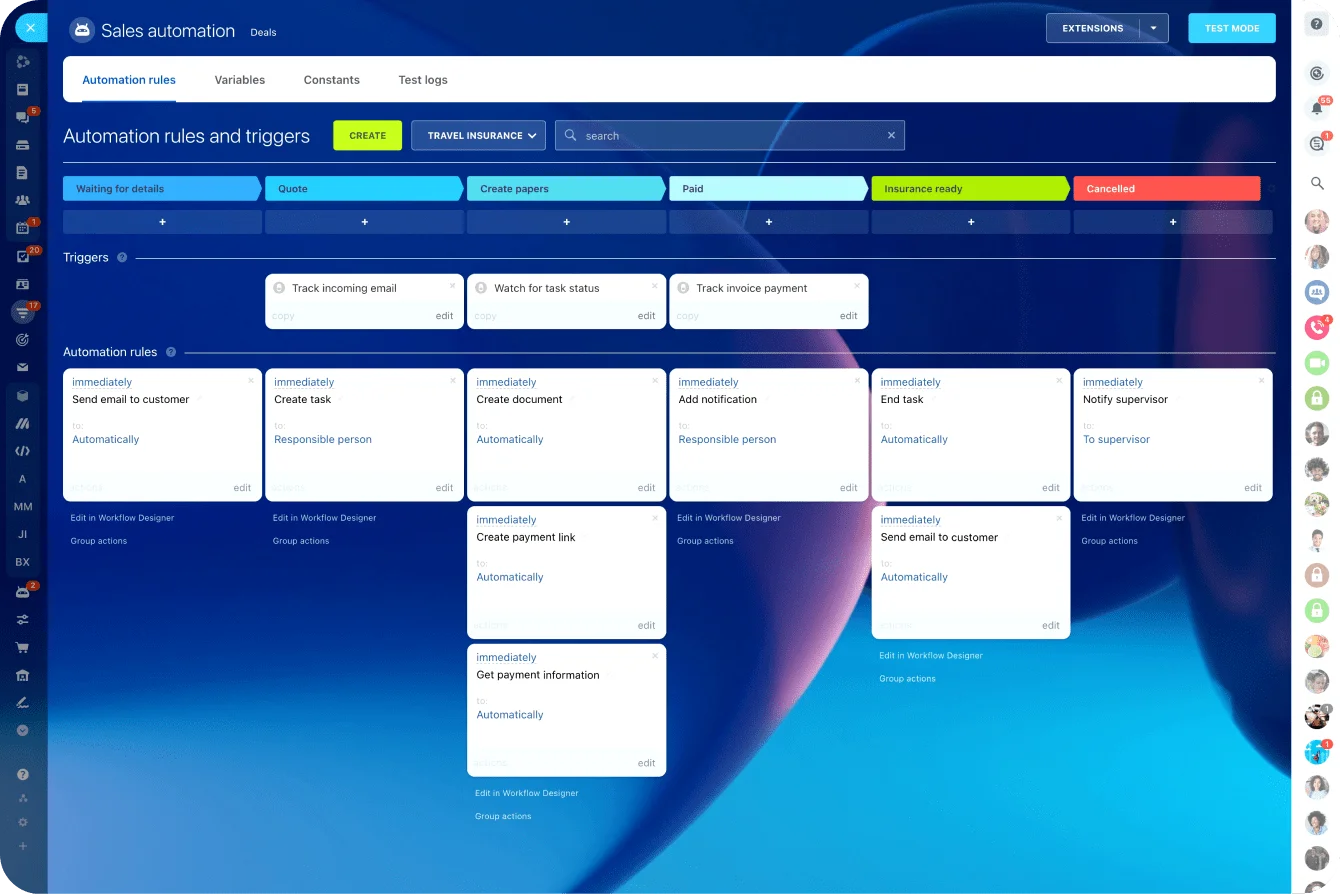
Behavior-based triggers fire on actions. A lead opens an email and clicks the pricing link; the next message addresses pricing concerns directly. A lead opens nothing for ten days, the system pauses or switches to a re-engagement track instead of pushing harder. The trigger replaces guesswork with response, and the recipient experiences a sequence that adapts.
Calendar timing still has a place for cold sequences with no behavioral data yet. The rule is to layer behavior on top of time, not the other way around.
2. Segment Before You Personalize
Personalization fails when it's applied to a poorly defined audience. Inserting a first name into a generic message doesn't make it personal; it just makes the genericness more conspicuous. Real personalized nurturing starts with CRM segmentation for marketing: splitting contacts by industry, role, company size, source, and product interest before a single email goes out.
A segment of forty SaaS-buyer CFOs who downloaded a TCO calculator is a real audience. A segment of "everyone who filled out any form last quarter" is not. The first can be addressed with content that speaks to their actual decision criteria. The second has to be addressed in vague platitudes, since anything specific will be wrong for most of the list.
3. Give Each Sequence One Clear Goal
Sequences drift when they try to do too much at once. A welcome series that also pitches the enterprise plan, also promotes the next webinar, also asks for a referral, and surveys for product feedback ends up doing none of them well. The recipient is asked to do five things, picks none, and the funnel reports a vague "engagement" number that nobody can act on.
A sharper approach: one sequence, one outcome. The trial-onboarding sequence aims to get the user to complete activation. The post-demo sequence aims to schedule the next call. The re-engagement sequence aims to either revive interest or trigger a clean unsubscribe. When the goal is singular, the copy gets sharper, the success metric gets honest, and the next sequence in the queue picks up cleanly.
4. Build in Pauses and Exit Criteria Up Front
Automation that doesn't sound robotic knows when to stop. Every sequence needs at least three exit conditions defined before it goes live. The first is conversion: the recipient took the action the sequence was designed to produce, so they should be removed and routed to whatever comes next. The second is disengagement: the recipient has ignored several messages in a row and should be paused before they unsubscribe. The third is context change: the recipient became a customer, opened a support ticket, or hit a different sequence's entry criteria, so this one should yield.
Without exit criteria, sequences keep firing into a void, and the void eventually fills with spam complaints.
5. Tie Lead Scoring to What Sales Actually Acts On
Lead scoring for sales only works when the score reflects sales-ready behavior, not vanity behavior. A lead who opens five marketing emails has done less than a lead who visited the pricing page once and downloaded a case study. The scoring model needs to weight pages, content types, and engagement depth in line with what closed-won contacts historically did.
The other half of this rule is calibration with the sales team. Whatever number triggers the marketing-to-sales handoff has to match what sales considers a useful conversation. If sales is closing none of the leads marketing routes over at score 75, the threshold is wrong, the inputs are wrong, or both. Recalibrating quarterly keeps the score honest.
6. Match Content to Buying Stage, Not to Internal Calendar
Content slotted into a nurture sequence should map to where the recipient is in their decision, not to whatever the marketing team happens to be promoting that month. A top-of-funnel contact who just discovered a problem doesn't need a product demo invitation; they need a primer that frames the problem clearly. A late-stage contact comparing vendors doesn't need a primer; they need a comparison sheet and proof points.
The rough mapping looks like this: the awareness stage gets educational content, the consideration stage gets comparison and methodology content, and the decision stage gets proof and risk-reduction content (case studies, security details, references). Personalized email sequences that follow this arc feel like a conversation that's progressing. Sequences that ignore stage and shuffle content randomly feel like noise.
7. Define the Marketing-to-Sales Handoff Explicitly
The seam between marketing automation and the sales team is where most nurture flows die. A lead crosses the score threshold, gets handed to a rep, the rep doesn't follow up for four days, and by the time they do, the lead has cooled or contacted a competitor. The handoff has to be a documented motion, not a vague intent.
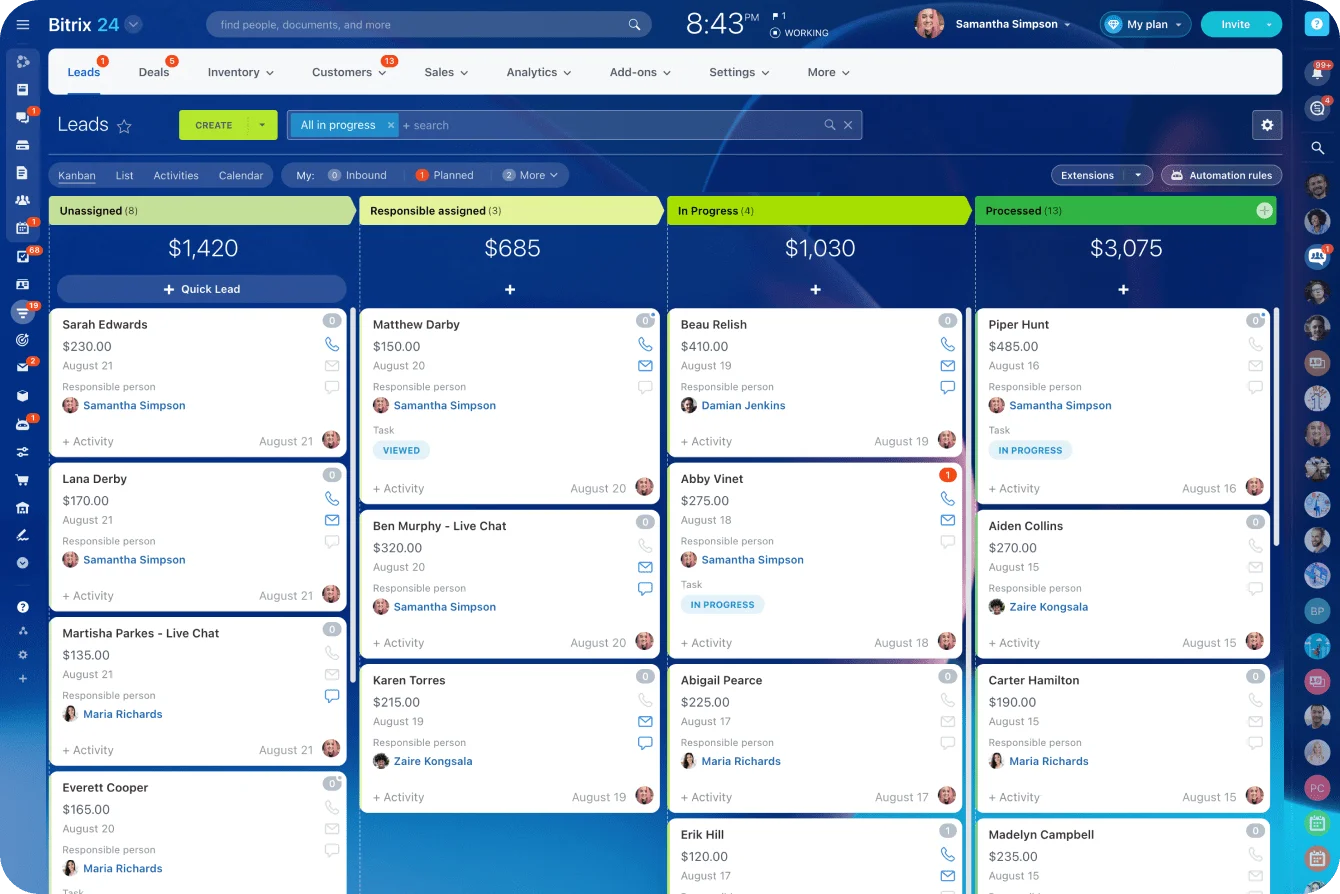
A workable handoff specifies who picks up the lead, in what timeframe, with what context attached, and what happens if the lead doesn't respond. Most CRMs let you automate the routing and start the SLA timer the moment the score crosses. Automated follow-up tasks for the rep, with the relevant content and engagement history pre-loaded, make the difference between "warm lead lost" and "warm lead converted."
8. Review and Tune Sequences on a Schedule
Sequences that work on day one almost always degrade by month six. Audiences shift, content gets stale, what used to be a strong subject line gets ignored, and the model that scored leads accurately a year ago no longer matches the buyer.
A quarterly review of every active sequence catches the drift early. Pull the open rates, click rates, conversion rates, and unsubscribe rates per sequence, identify the bottom quartile, decide whether to retire or rewrite, and ship the change. Treating sequences as permanent infrastructure is how they become the source of the robot voice. Treating them as living documents keeps them human.
Time-Based vs. Behavior-Based Nurture Sequences
The choice between time-based and behavior-based isn't really either/or in mature programs - most production sequences blend both. The table below shows where each approach pulls its weight, so you can decide which mix fits your stage.
|
Dimension |
Time-Based Sequence |
Behavior-Based Sequence |
|---|---|---|
|
Trigger |
Fixed interval after entry (Day 1, 3, 7) |
Recipient action (click, page visit, form-fill, inactivity) |
|
Best fit |
Cold lists, top-of-funnel content, fixed-cycle programs |
Active leads, mid-to-late funnel, buying-stage progression |
|
Personalization depth |
Limited to segment-level inputs |
Adapts per recipient based on signals |
|
Setup effort |
Low: define cadence and content |
Higher: define triggers, branches, and exit rules |
|
Failure mode |
Keeps firing regardless of the recipient state |
Stalls if behavior tracking is incomplete |
|
Reads as |
Can sound formulaic if cadence is rigid |
Reads as responsive when triggers are tuned |
|
Recommended use |
Onboarding basics, drip education |
Sales-handoff readiness, re-engagement, post-demo |
The general pattern: lead with a time-based skeleton for the first sequence to get something live, then layer behavior-based branches on top once you have a few weeks of real engagement data to design against.
Initial Setup: A Starter Sequence That Actually Ships
Most teams over-engineer their first nurture flow and never launch it. A simpler approach gets something live, generates real data, and then earns the right to add complexity.
A starter setup needs four things: a single segment defined by a real form-fill (say, a downloaded buyer's guide on a specific topic), a four-message behavior-aware sequence that delivers progressively deeper content on that topic, a clear scoring rule that promotes engaged contacts to a sales-ready segment, and a defined handoff to a sales rep with an SLA. That's it. No scoring across fifteen behaviors. No twelve-step sequence. No multivariate testing on subject lines until you have enough volume to draw conclusions.
Running automated lead nurture within a single CRM makes this setup straightforward, since the segment, trigger, content, score, and handoff all live in the same place. The lead is a single record. The activity lives on one timeline. Marketing and sales share the same context, which makes the handoff feel continuous to the recipient rather than like a baton drop.
After eight to ten weeks of operating the starter sequence, you have data on which message earns the most clicks, where contacts drop off, and how the score correlates with closed deals. That's the foundation for adding the second sequence, refining the scoring, and so on. Each iteration builds on real evidence instead of theoretical best practice.

What Goes Wrong in Marketing Automation Setups
A few things worth knowing before you ship anything.
Any system amplifies whatever logic you give it, and marketing automation with a CRM is no exception. If the segmentation is sloppy, automation makes the sloppiness more visible at scale. The fix is in the segment definition, not in the email copy.
Over-personalization breaks trust as fast as no personalization. Mentioning a contact's company, role, last download, and city in the same email reads as surveillance, not service. Use enough specificity to feel relevant and stop there.
Most teams underestimate the cost of bad data. A sequence built on a list with twenty percent stale email addresses will deliver inflated unsubscribe rates and depressed open rates, both of which corrupt the model that decides who gets what next. Periodic list hygiene is part of the program, not a separate project.
Tracking gaps causes silent failures. If your CRM doesn't see the website page visit, the behavior-based trigger never fires, and the sequence falls back to time-based defaults without anyone noticing. Audit the tracking layer before blaming the copy.
The marketing-to-sales handoff is where most programs lose the largest share of revenue. A lead handed to sales without context, or after a four-day delay, is effectively a lost lead. The handoff deserves the same engineering rigor as the nurture sequence itself.
Bitrix24: Behavior Triggers, Deal Stages, and Automated Follow-Ups in One Place
Pulling all of this together inside a single platform is what makes the difference between a workable marketing automation program and a tangle of disconnected tools. Bitrix24's CRM marketing module lets you build segmented audiences, trigger personalized email sequences, and track engagement against the same contact records your sales team is already working with. Forms and landing pages feed directly into the CRM, so new contacts enter the right segment with source and context already attached. Behavior-based triggers and time-based cadences both live in the same workflow editor, so you can mix the two without bolting platforms together.
The automation rules engine handles the orchestration layer: scoring leads as they engage, moving deals between stages when triggers fire, and assigning automated follow-up tasks to the right rep at the right moment. When a lead crosses your defined score threshold, the platform routes the record, opens a task for the rep with the full activity history attached, and starts the SLA timer. The handoff motion described earlier becomes a configured workflow rather than a process diagram on a Confluence page.
Deal stages tie the nurture program to revenue. A lead promoted from marketing-qualified to sales-qualified shows up at the correct pipeline stage with the right context, and sales activity from that point forward continues to feed the same record. Marketing sees what sales does with the leads it sends. Sales sees what marketing did before the handoff. Conversations across email, chat, and messaging channels in the Contact Center are tied to the same record, so engagement signals don't get lost across tools. Both teams work from the shared timeline, which is what makes the customer experience feel continuous instead of stitched together.
Sign up for Bitrix24 and build your first behavior-aware nurture sequence in an afternoon, with the CRM, the automation engine, and the sales pipeline already connected.
Upgrade Your Marketing Automation
Implement Bitrix24's CRM for marketing automation that actually nurtures leads. Turn disjointed processes into a seamlessly integrated workflow with personalized sequences, behavior-based triggers, and seamless marketing-to-sales handoff.
Get Started NowFAQs
Which Bitrix24 tools support marketing automation for lead nurture?
Bitrix24 tools that support marketing automation for lead nurture include the CRM marketing module for audience segmentation and email sequences, the automation rules engine for behavior-based triggers and lead scoring, and deal stages with pipeline automation for the marketing-to-sales handoff. All three live inside the same CRM, so contact records, engagement history, and rep activity stay on a single timeline.
How does marketing automation for lead nurture avoid message fatigue?
Marketing automation for lead nurture avoids message fatigue by combining behavior-based triggers with explicit pause and exit rules. The system slows or stops sending when a recipient stops engaging, and routes inactive contacts to a re-engagement track instead of pushing harder on the original sequence. Frequency caps applied across all active sequences prevent any single contact from receiving more than a defined number of messages in a given window.
When should sales take over in marketing automation for lead nurture?
Sales should take over the moment a lead crosses a defined score threshold tied to sales-ready behavior, not arbitrary email opens. The handoff is documented as an automated workflow: routing, SLA timer, context-loaded task. If sales consistently closes only a small share of the routed leads, the threshold or the scoring inputs need recalibration, usually quarterly.
Which KPIs should teams monitor first in marketing automation for lead nurture?
The KPIs teams should monitor first in marketing automation for lead nurture are open rate, click-through rate, conversion rate per sequence, unsubscribe rate, and the rate at which scored leads convert to closed-won deals. Engagement metrics confirm the copy is working; the closed-won rate confirms the scoring model is working. Both have to be tracked together to avoid optimizing for vanity numbers.
What is the difference between time-based and behavior-based nurture sequences?
The difference between time-based and behavior-based nurture sequences is the trigger. Time-based sequences fire on a fixed schedule after a contact enters the flow, regardless of what the contact does next. Behavior-based sequences fire when the contact takes a specific action like clicking a link, visiting the pricing page, or going inactive, so the cadence adapts to the recipient. Most production programs blend both, using time-based skeletons with behavior-based branches layered on top.
What does a well-designed starter nurture sequence look like?
A well-designed starter nurture sequence includes one clearly defined audience segment from a single form-fill, four messages spaced by a mix of time and behavior triggers, content that progresses from awareness to consideration, a scoring rule that promotes engaged contacts, and a documented handoff to a sales rep with an SLA. Keep it small at launch, run it for eight to ten weeks, then iterate based on real engagement data instead of theoretical best practice.